
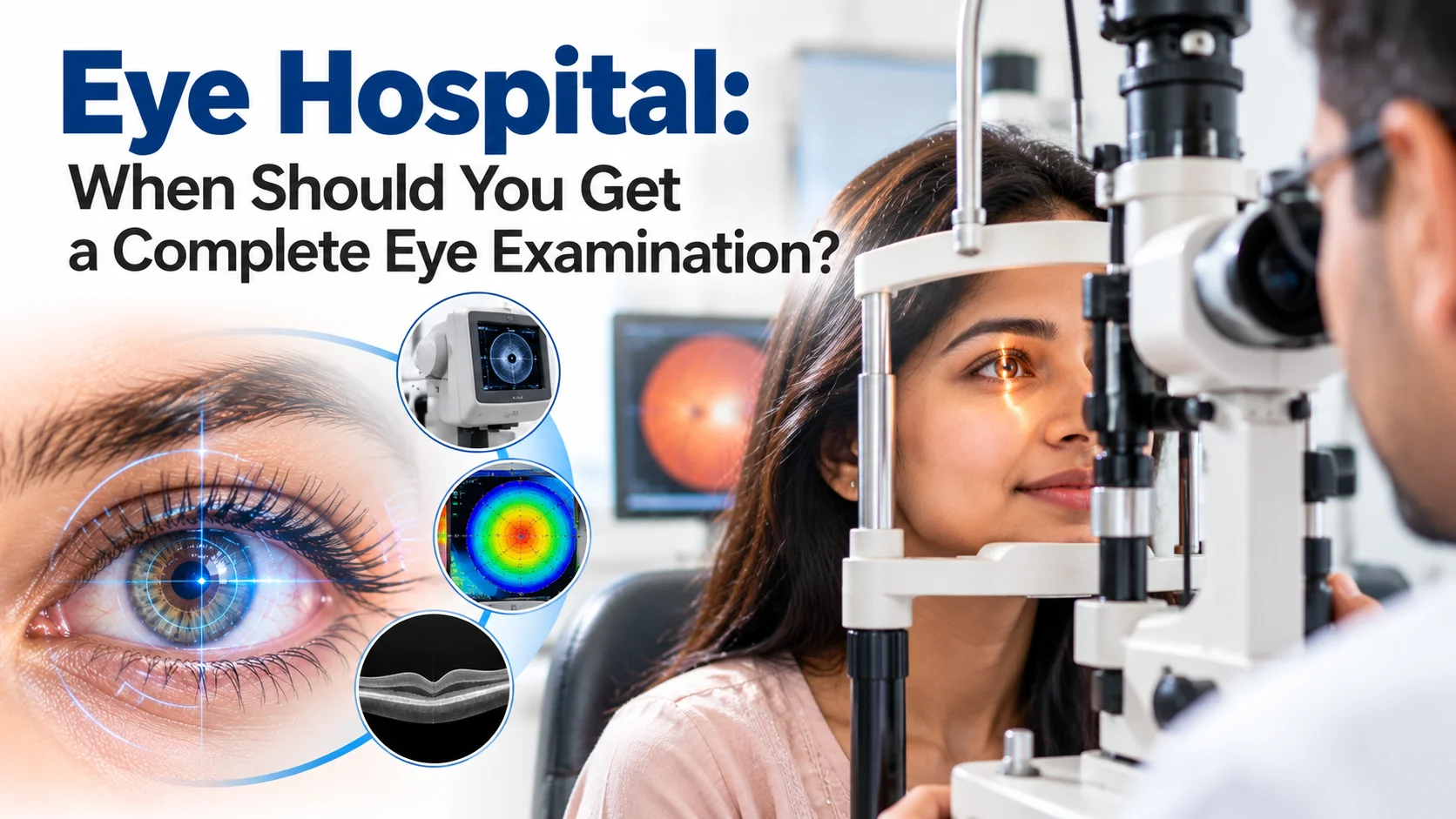
A practical guide to symptoms, risk factors, screening, and seeking timely ophthalmic care
Your eyes can change gradually without causing pain. You may notice that road signs look less clear, reading takes more effort, headlights seem unusually bright, or your eyes feel uncomfortable after using a screen. Some important conditions, however, develop with few early symptoms. A complete eye examination helps distinguish a simple change in spectacle power from problems involving the cornea, lens, optic nerve or retina.
If you are searching for an eye hospital in Ambala, a useful first question is not which procedure to choose, but what type of evaluation your symptoms require. This guide explains when to schedule an examination, what tests may be recommended, which symptoms need urgent attention and how to prepare for an appointment. It is intended for patients and families in Ambala City and nearby parts of Haryana.
Why an eye examination involves more than checking spectacle power
A vision chart measures how clearly you can see at a set distance, but a person may read the chart reasonably well and still have an early eye disease. A comprehensive assessment considers the symptoms, medical history, previous treatment and findings on examination. Depending on the clinical situation, an ophthalmologist may evaluate eye pressure, the ocular surface, the crystalline lens, the optic nerve and the retina.
The need for tests is individual. Not every patient requires retinal imaging, a visual-field examination or a surgical assessment. The purpose is to identify a diagnosis and decide whether observation, spectacles, medicines, further investigations or a procedure should be discussed.
Seven situations in which you should arrange an eye check-up
1. Your vision is becoming blurred or changing frequently
Blurred vision may occur with refractive errors such as myopia, hyperopia or astigmatism, but it can also reflect a cataract, dry eye, blood-glucose fluctuation or retinal disease. If you need to change spectacles repeatedly, the cause deserves assessment rather than simply purchasing stronger lenses. Mention whether the blurring affects one eye or both, whether it comes and goes and whether it started suddenly.
2. Night driving has become uncomfortable
Increasing glare, halos or difficulty seeing in low light can make nighttime travel challenging. Cataracts are one possible explanation, although dry eyes and other optical issues can contribute. A clinician can assess the lens and other structures and discuss whether treatment is needed. Cataract surgery is generally considered in the context of visual function and examination findings, not age alone.
3. You have diabetes, even when you see clearly
Diabetes can affect small blood vessels in the retina. Diabetic retinopathy may develop before a patient notices a meaningful change in sight. People with diabetes should follow an individualized plan for dilated retinal examinations, based on the type and duration of diabetes, previous findings and advice from their treating clinicians. A normal-feeling eye is not a substitute for screening.
For information about this condition at Leelawati Hospital, see: https://leelawatihospital.net/departments/eye-surgery/diabetic-retinopathy/
4. You have a family history of glaucoma
Glaucoma damages the optic nerve and often has no obvious symptoms in its early stages. Family history, advancing age and other factors may increase risk. An eye-pressure reading alone cannot establish or exclude every form of glaucoma. The examination may include optic-nerve evaluation and, when indicated, visual-field testing or additional imaging. The aim of ongoing care is to detect change and protect remaining vision.
5. Your eyes are frequently dry, red or irritated
Burning, a gritty sensation, fluctuating vision and discomfort after prolonged screen use are common complaints. Possible causes include tear-film disturbance, eyelid inflammation, allergies and environmental exposure. Eye redness can also have more serious causes, particularly when accompanied by pain, light sensitivity or reduced vision. Avoid prolonged self-treatment with medicated drops without an appropriate diagnosis.
6. A child is squinting, sitting close to screens or struggling at school
Children may not recognize that their vision differs from that of others. Holding books close, frequent eye rubbing, closing one eye, persistent head tilting or difficulty seeing the classroom board warrants an eye assessment. Childhood vision problems can include refractive error, strabismus and amblyopia. Early assessment is important because some visual-development problems respond better to treatment in childhood.
7. You are considering LASIK or another vision-correction procedure
LASIK is not simply a choice based on how much spectacle power a person has. Suitability depends on prescription stability, corneal shape and thickness, dry-eye status and overall ocular health, among other factors. Some patients may be advised to continue with glasses or contacts, or to discuss other approaches. A preoperative evaluation should include a discussion of expected benefits, alternatives, limitations and complications.
Read the hospital’s laser-eye-surgery information: https://leelawatihospital.net/departments/eye-surgery/laser-eye-surgery/
Symptoms that require urgent medical attention
Routine appointments are not appropriate for every symptom. Seek prompt emergency ophthalmic assessment if you experience sudden loss of vision, a new curtain-like shadow, many new floaters with flashes, a severe painful red eye, eye injury or chemical exposure. Sudden eye pain with nausea and blurred vision can occur in acute angle-closure glaucoma and is an emergency. Do not drive yourself if your sight is affected.
If a chemical splashes into the eye, begin immediate irrigation with clean running water and seek emergency care. Do not delay emergency assessment while trying home remedies or waiting for an ordinary outpatient appointment.
What happens during a complete eye examination?
History and visual acuity
The ophthalmologist or clinical team may ask about the onset of symptoms, spectacles, contact-lens use, medicines, allergies, prior eye surgery and conditions such as diabetes or hypertension. Visual acuity is checked and refraction may be performed to assess optical correction.
Front-of-eye assessment
A slit-lamp examination allows the clinician to inspect structures such as the eyelids, tear film, cornea, anterior chamber and lens. Findings may help explain dryness, discomfort, inflammation, corneal disease or cataract-like symptoms.
Eye pressure and optic-nerve evaluation
Tonometry estimates pressure inside the eye. If glaucoma is suspected, the clinician may also assess the optic nerve, drainage angle and visual field, depending on the case. A single normal pressure reading does not guarantee that glaucoma is absent.
Dilated retinal examination
Dilating drops enlarge the pupil so the clinician can examine the retina and optic nerve more thoroughly. This can help reveal diabetic retinopathy, retinal tears and other disorders. Dilation may leave vision blurry and light-sensitive for several hours, so ask whether you should arrange transport and bring sunglasses.
Additional investigations when needed
Some patients require optical coherence tomography, retinal photography, corneal measurements, visual-field testing or other investigations. These are prescribed for specific clinical questions; they are not mandatory components of every routine eye check-up. Ask what each test is meant to find and how the result will affect your care.
How frequently should adults have their eyes examined?
There is no universal schedule that fits everyone. Frequency depends on age, family history, diabetes, hypertension, contact-lens use, symptoms, previous eye disease and examination findings. Some adults may need only periodic review, while people with diagnosed eye conditions may require much closer follow-up.
Do not wait for the next scheduled check-up if your sight changes suddenly or you develop warning symptoms. People with diabetes should ask their diabetes-care team and ophthalmologist about the appropriate retinal screening interval. Anyone with known glaucoma or suspected glaucoma should follow the treating specialist’s monitoring plan.
Eye examinations for common eye-care needs in Ambala
Cataract symptoms and surgical assessment
A cataract is a clouding of the natural lens. Symptoms may include gradual blurring, glare, faded colours and difficulty with night driving. Surgery replaces the cloudy lens with an artificial intraocular lens when clinically appropriate. Evaluation includes understanding the impact on daily activities, examining the eye and discussing lens choices and realistic expectations. Not everyone with an early cataract needs immediate surgery.
Leelawati Hospital lists cataract surgery among its eye-care services. Hospital information: https://leelawatihospital.net/departments/eye-surgery/cataract-surgery/
Glaucoma monitoring
Glaucoma care is often ongoing rather than a one-time procedure. Treatment may involve pressure-lowering medicines, laser or surgery depending on the type and severity. Follow-up is important because loss of peripheral vision may be unnoticed until disease is advanced. Patients should not discontinue prescribed drops without speaking to their clinician.
Diabetic retinal evaluation
The retina is light-sensitive tissue at the back of the eye. Diabetes-related changes may cause leakage, swelling or abnormal blood-vessel growth. Treatment decisions depend on findings and may include monitoring, injections, laser or other interventions where indicated. Blood-sugar, blood-pressure and lipid management remain important parts of systemic care, alongside eye examinations.
LASIK consultation
An adult searching for a LASIK hospital in Ambala may primarily want to know whether spectacle dependence can be reduced. The consultation should first establish suitability. Corneal assessment and ocular-surface evaluation are particularly relevant, and LASIK cannot promise perfect unaided vision for every patient or remove all future need for glasses.
Eye discomfort and dry eye
Dry eye can be associated with screen use, age, medications, eyelid conditions and environmental factors. Management varies according to the cause and may include changes in daily habits and clinician-recommended treatment. Persistent symptoms merit evaluation, especially when redness or reduced vision accompanies discomfort.
Questions to ask before cataract or laser vision treatment
Informed consent is a conversation, not merely a signed form. Ask what diagnosis has been established, whether treatment is necessary now, which alternatives exist, what the expected improvement and limitations are, what complications are possible and how recovery and follow-up will work. If a procedure is elective, there is value in understanding the reasons for proceeding as well as the reasons for waiting.
For cataract surgery, ask how lens choice relates to reading, distance vision, astigmatism and possible spectacle use after treatment. For LASIK, ask whether dry eyes or corneal measurements affect suitability. If you have glaucoma, diabetes or retinal disease, discuss how these conditions may influence the treatment plan.
What to bring to an eye appointment
- Your current spectacles and any contact-lens details.
- Previous eye prescriptions, scans, operative records and discharge summaries, when available.
- A list of current medicines and eye drops, including anything bought without prescription.
- Relevant diabetes or blood-pressure records if you have these conditions.
- A short timeline of your symptoms, including which eye is affected and whether the change was sudden.
- A companion or transport arrangement if dilating drops may be used.
If you wear contact lenses and are attending a refractive surgery assessment, ask the hospital in advance whether you need to stop wearing them for a specified period before measurements. The required interval varies with lens type and clinical guidance.
Local eye care at Leelawati Eye Super Specialty Hospital
Leelawati Eye Super Specialty Hospital is located at 8, 9 Police Line Road, near Arya Chowk, Ambala City, Haryana. Its official website identifies eye-care services that include laser eye surgery, cataract surgery, diabetic retinopathy care, glaucoma treatment and dry-eye care. The website also identifies Dr. Rajat Mathur as an ophthalmology specialist. Specific tests, appointment availability and treatment suitability should be confirmed directly with the hospital.
Patients searching for an eye hospital in Haryana, eye doctors in Ambala, a cataract hospital in Ambala or an eye hospital near me should focus on the actual clinical need and whether the required assessment or treatment is available. A location-based search result cannot determine which clinician or procedure is appropriate for an individual patient.
The hospital’s official overview is available at https://leelawatihospital.net/about-us/ and its contact page at https://leelawatihospital.net/contact/
Frequently asked questions
1. Can I have eye disease even if I can read clearly?
Yes. Early glaucoma and diabetic retinal changes can occur without obvious symptoms. Examination findings and individual risk factors determine whether further testing is necessary.
2. Does every blurred-vision complaint mean I need new glasses?
No. Changes in spectacle power are one possibility, but cataract, dry eye, fluctuating blood sugar and retinal problems can also affect vision. A clinical assessment helps identify the cause.
3. When is sudden blurred vision an emergency?
Sudden vision loss or marked new blurring, especially with pain, weakness, flashes, numerous floaters or a dark curtain, requires urgent medical evaluation.
4. Should people with diabetes visit an eye doctor without symptoms?
Yes. Diabetic retinopathy may not cause symptoms initially. Ask your treating clinicians how often a dilated retinal examination is appropriate for you.
5. Is eye-pressure testing enough to rule out glaucoma?
No. Glaucoma assessment may require evaluation of the optic nerve, visual field and other structures. Eye pressure is only one part of the clinical picture.
6. Are halos around lights always caused by cataract?
No. Halos can have several causes, including optical and corneal problems. New halos with a painful red eye or nausea require emergency assessment.
7. Is a cataract operation necessary as soon as cataract is diagnosed?
Not always. The decision depends on the effect on daily activities, examination findings, patient needs and the ophthalmologist’s advice.
8. Can anyone who wears spectacles undergo LASIK?
No. Corneal anatomy, prescription stability, ocular-surface health and other factors affect suitability. Only an appropriate preoperative assessment can guide the decision.
9. Will my vision be blurry after dilating eye drops?
It may be temporarily blurry and sensitive to light for several hours. Ask about transport before your visit and follow the clinic’s instructions.
10. How can I arrange an eye consultation in Ambala?
Contact Leelawati Hospital using the verified telephone numbers or official contact page. Confirm the doctor’s schedule and whether you need a routine examination or an urgent assessment.
Appointments and contact details
Leelawati Eye Super Specialty Hospital
8, 9 Police Line Road, Near Arya Chowk, Ambala City, Haryana, India
Telephone: 0171 255 0456 / 0171 255 0446
Website: https://leelawatihospital.net/
Contact and appointment enquiries: https://leelawatihospital.net/contact/
Conclusion: An examination should come before a treatment decision
Some eye problems are minor and temporary; others can affect sight without causing early symptoms. The safest starting point is a well-directed evaluation based on what you are experiencing and your personal risk. Whether your concern is changing vision, cataract symptoms, possible glaucoma, diabetes-related eye disease or LASIK suitability, discussing it with a qualified ophthalmologist can clarify the next step.
Medical disclaimer: This article provides general health information only. It is not a diagnosis or a substitute for an individual medical consultation. Sudden loss of vision, severe painful red eye, suspected retinal detachment or eye injury requires urgent professional care.
