
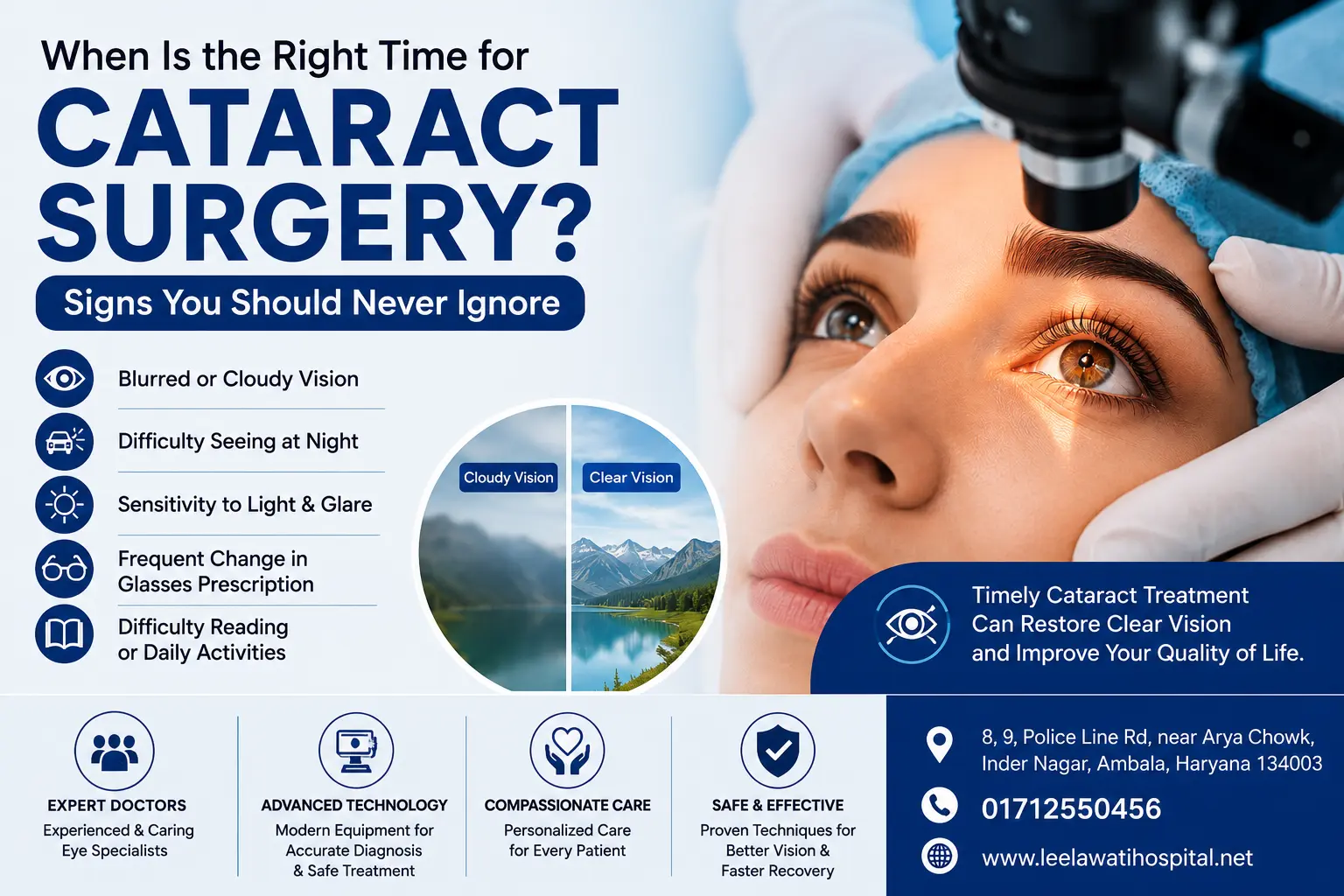
Cataracts are among the most common age-related eye conditions, affecting millions of people worldwide. While cataracts usually develop slowly, ignoring the symptoms for too long can seriously affect your quality of life and vision. Many people delay treatment because they assume blurred vision is simply a normal part of aging. However, timely diagnosis and treatment can protect your eyesight and help maintain independence in daily activities.
If you are noticing changes in your vision, understanding when cataract surgery becomes necessary is extremely important. Patients seeking Cataract Surgery in Ambala often ask how to know the right time for surgery and what symptoms should never be ignored.
At Leelawati Hospital, Ambala, experienced eye specialists provide advanced cataract diagnosis and modern treatment solutions designed to restore clear vision safely and effectively.
What Is a Cataract?
A cataract occurs when the natural lens of the eye becomes cloudy. Normally, the lens helps focus light onto the retina to produce clear vision. Over time, proteins in the lens may break down and clump together, causing blurred or cloudy vision.
Cataracts usually develop gradually and may affect one or both eyes. In the early stages, symptoms may be mild, but as the cataract progresses, vision problems become more noticeable.
Cataract Treatment in Ambala has become highly advanced with the availability of modern surgical technology and experienced ophthalmologists.
Common Causes of Cataracts
Several factors can contribute to cataract formation, including:
Aging
Age-related cataracts are the most common type and usually develop after the age of 50.
Diabetes
People with diabetes have a higher risk of developing cataracts earlier in life.
Excessive Sun Exposure
Long-term exposure to ultraviolet (UV) rays may increase cataract risk.
Smoking and Alcohol Consumption
Smoking and excessive alcohol intake may accelerate lens damage.
Eye Injuries
Past eye trauma or surgeries can sometimes lead to cataract formation.
Long-Term Steroid Use
Certain medications, especially corticosteroids, may contribute to cataract development.
Genetic Factors
Some people may inherit a higher risk of developing cataracts.
Signs You Should Never Ignore
Many patients delay treatment because they do not recognize the seriousness of the symptoms. Here are important warning signs that indicate you may need Cataract Surgery in Ambala.
Blurred or Cloudy Vision
One of the earliest and most common symptoms is blurry vision that does not improve with glasses.
Difficulty Seeing at Night
If driving at night becomes difficult due to glare from headlights or poor visibility, cataracts may be progressing.
Increased Sensitivity to Light
Bright sunlight or indoor lights may cause discomfort or excessive glare.
Frequent Changes in Glasses Prescription
Repeated changes in eyeglass power without long-term improvement can indicate worsening cataracts.
Faded or Yellow Colors
Colors may begin to appear dull, faded, or slightly yellowish.
Double Vision in One Eye
Some cataracts can cause double vision or ghost images.
Difficulty Reading or Watching Television
Daily activities such as reading newspapers, using mobile phones, or watching television may become challenging.
If these symptoms interfere with your daily life, it may be the right time to consult an eye specialist at Leelawati Hospital in Ambala.
When Is the Right Time for Cataract Surgery?
There is no single “perfect age” for cataract surgery. The right time depends on how much the cataract affects your daily activities and quality of life.
Doctors usually recommend surgery when:
- Vision problems affect work or daily tasks
- Driving becomes unsafe
- Reading becomes difficult
- Glasses no longer improve vision
- Cataracts interfere with hobbies or social activities
- Eye examinations show significant lens clouding
Modern cataract surgery is safe, quick, and highly effective. Delaying surgery unnecessarily can increase complications and make the procedure more difficult later.
How Cataracts Are Diagnosed
Early diagnosis plays an important role in successful treatment outcomes.
At Leelawati Hospital, specialists perform comprehensive eye evaluations that may include:
Visual Acuity Test
Measures how clearly you can see.
Slit-Lamp Examination
Allows doctors to examine the eye structures under magnification.
Retinal Examination
Checks the health of the retina and optic nerve.
Eye Pressure Test
Helps identify associated eye conditions such as glaucoma.
Regular eye checkups are especially important for adults above 40 years of age.
Cataract Treatment Options
The only permanent treatment for cataracts is surgery.
Early Stage Management
In mild cases, doctors may recommend:
- Updated glasses
- Better lighting
- Anti-glare lenses
- Regular monitoring
Advanced Cataract Surgery
When vision impairment becomes significant, surgery is recommended.
Modern Cataract Surgery in Ambala typically involves:
- Removal of the cloudy lens
- Replacement with an artificial intraocular lens (IOL)
The procedure is usually:
- Minimally invasive
- Painless
- Quick
- Performed as a day-care procedure
Most patients experience significant improvement in vision after surgery.
Benefits of Early Cataract Treatment
Seeking timely Cataract Treatment in Ambala offers several advantages:
Better Vision Quality
Early treatment helps restore clearer and sharper vision.
Improved Safety
Reduces risks of falls, accidents, and driving difficulties.
Faster Recovery
Treating cataracts before they become overly dense may improve surgical outcomes.
Enhanced Quality of Life
Patients often regain confidence and independence in daily activities.
Reduced Eye Strain
Clearer vision minimizes eye fatigue and headaches.
Risks of Delaying Cataract Surgery
Ignoring cataract symptoms for too long can create complications such as:
- Severe vision loss
- Increased risk of falls and injuries
- Difficulty performing routine tasks
- Advanced cataracts that are harder to remove
- Increased eye pressure
- Potential glaucoma risk
Early consultation with an experienced eye specialist can help prevent these complications.
Prevention Tips for Healthy Vision
While cataracts cannot always be prevented completely, certain lifestyle habits may help lower the risk:
- Wear UV-protective sunglasses
- Control diabetes effectively
- Avoid smoking
- Maintain a healthy diet rich in antioxidants
- Get regular eye examinations
- Protect eyes from injuries
- Limit excessive alcohol intake
Regular preventive eye care is important for long-term eye health.
Why Choose Leelawati Hospital for Cataract Surgery in Ambala?
Leelawati Hospital is known for providing comprehensive eye care services with patient-focused treatment and advanced ophthalmology facilities.
Experienced Eye Specialists
The hospital has skilled ophthalmologists experienced in diagnosing and managing various eye conditions, including cataracts.
Advanced Diagnostic Facilities
Modern eye evaluation technology helps ensure accurate diagnosis and effective treatment planning.
Personalized Patient Care
Every patient receives individualized consultation and treatment recommendations.
Modern Surgical Techniques
Advanced cataract surgery methods support safer procedures and quicker recovery.
Trusted Eye Care in Ambala
Patients from Ambala and nearby regions trust Leelawati Hospital for quality eye treatment and compassionate care.
Advanced Technology Used
Modern ophthalmology technology plays an important role in successful cataract treatment.
Leelawati Hospital utilizes advanced diagnostic and surgical equipment for:
- Precise cataract evaluation
- Improved surgical accuracy
- Better lens implantation outcomes
- Enhanced patient safety
- Faster visual recovery
The use of modern techniques helps improve treatment effectiveness and patient satisfaction.
Expert Team Information
The ophthalmology team at Leelawati Hospital focuses on evidence-based eye care and patient safety. Specialists work closely with patients to understand symptoms, explain treatment options, and guide them through every stage of cataract management.
From diagnosis to post-surgical follow-up, patients receive complete support and personalized care.
Conclusion
Cataracts can gradually affect your vision and overall quality of life, but timely treatment can restore clear eyesight and confidence. Ignoring symptoms such as blurred vision, glare sensitivity, or difficulty seeing at night may lead to worsening eye problems over time.
If you or your loved one are experiencing signs of cataracts, early consultation is important. Modern Cataract Surgery in Ambala offers safe and highly effective treatment options with excellent recovery outcomes.
Leelawati Hospital provides advanced cataract diagnosis, expert surgical care, and patient-centered treatment to help individuals regain better vision and maintain long-term eye health.
Frequently Asked Questions (FAQs)
1. How do I know if I need cataract surgery?
If cataracts begin interfering with daily activities such as reading, driving, or recognizing faces, surgery may be recommended by your eye specialist.
2. Is cataract surgery painful?
Modern cataract surgery is generally painless and performed under local anesthesia. Most patients experience minimal discomfort.
3. How long does cataract surgery take?
The procedure usually takes about 15 to 30 minutes and is commonly performed as a day-care surgery.
4. What is the recovery time after cataract surgery?
Most patients notice vision improvement within a few days, although complete healing may take a few weeks.
5. Where can I get the best Cataract Treatment in Ambala?
Leelawati Hospital in Ambala offers advanced cataract diagnosis and modern surgical treatment with experienced eye specialists.
Book Your Eye Consultation Today
If you are experiencing blurred vision or other cataract symptoms, consult the experts at Leelawati Hospital for comprehensive eye evaluation and advanced cataract care.
Leelawati Hospital
8, 9, Police Line Rd, near Arya Chowk, Inder Nagar, Ambala, Haryana 134003
Phone: 01712550456
Website: https://leelawatihospital.net/
Early diagnosis and timely treatment can help protect your vision and improve your quality of life.
Continue Reading About Cataract Care
Discover more expert resources on cataract treatment, advanced eye surgery, and choosing the right eye care for clearer vision.
Advanced Cataract Surgery in Ambala
|
Cataract Treatment in Ambala
|
