
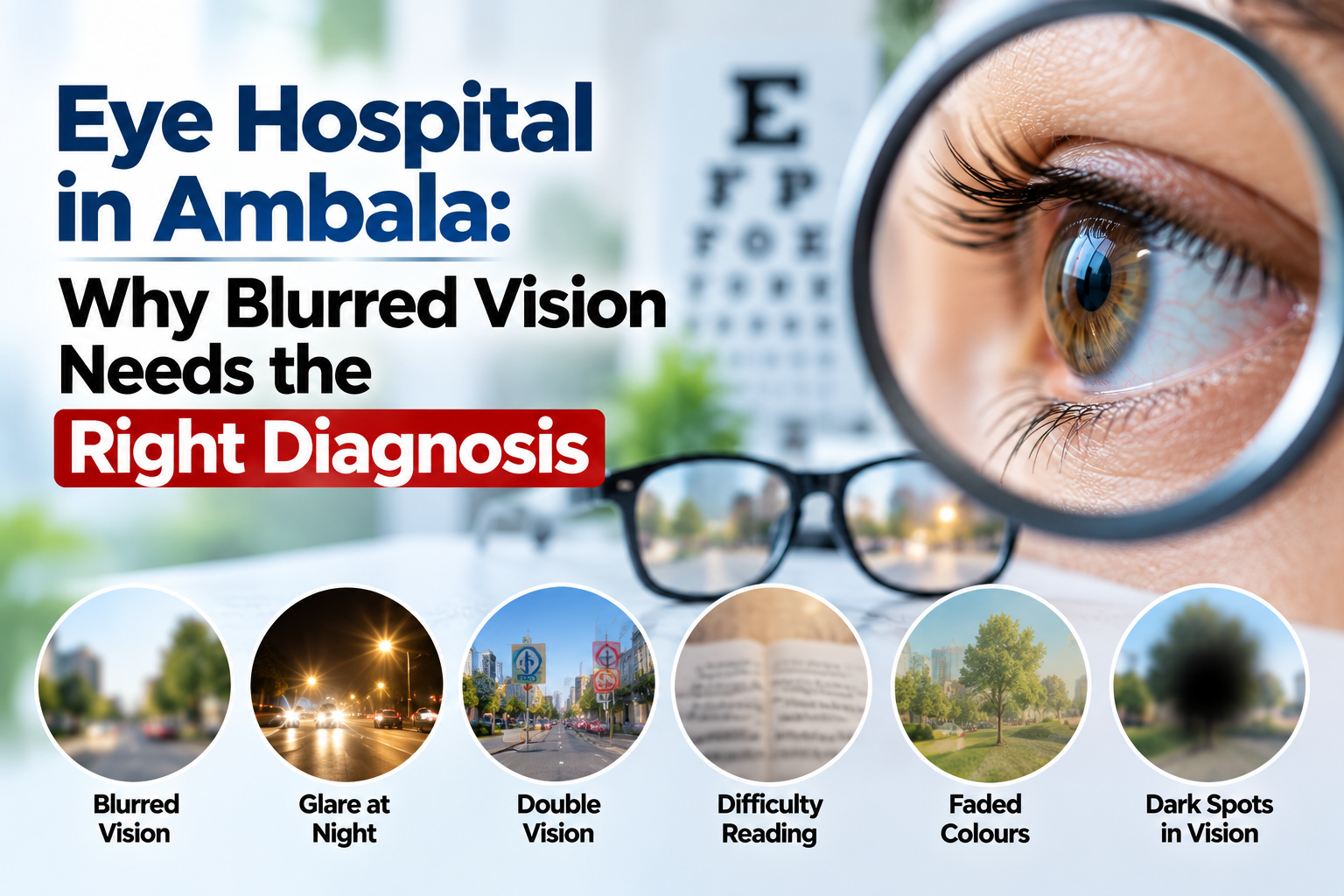
Blurred vision does not always mean that you need a new pair of glasses. It may be linked to dry eyes after prolonged screen use, a changing spectacle prescription, a cataract developing gradually, or a problem affecting the retina or optic nerve. The important question is not simply whether your vision is blurred. It is why it is blurred, how quickly it changed and whether other symptoms are present.
For someone searching for an eye hospital in Ambala, understanding these differences can make a consultation more useful. This guide explains how eye doctors approach blurred vision, which symptoms need urgent care, and how diagnosis informs treatment. It is designed to support a discussion with an ophthalmologist rather than replace an examination.
Blurred vision is a symptom, not a diagnosis
Patients use the phrase “blurry eyesight” to describe several experiences. Words on a page may lose their sharpness; distant signboards may seem unclear; lights may scatter or form halos; straight lines may appear wavy; or one part of the visual field may be missing. These experiences point to different parts of the visual system and do not all require the same treatment.
The first distinction an eye doctor makes is between a gradual change and a sudden one. A slowly changing glasses power may be relatively straightforward, while sudden loss of vision in one or both eyes can indicate an ophthalmic or neurological emergency. Even when blur is mild, persistent symptoms warrant assessment if they do not resolve or if they are worsening.
Seven clues that help an eye doctor investigate blurred eyesight
1. Is the blur in one eye or both?
Covering one eye at a time, without pressing on the eye, can sometimes help describe whether the problem is present in one eye or both. This is not a diagnostic test and should never delay medical care. A problem affecting a single eye may arise from the cornea, lens, retina or optic nerve. Blurring in both eyes can have many causes, including prescription changes, dry eye and systemic conditions. Sudden visual change in either pattern needs urgent assessment.
2. Did it begin suddenly or develop over months?
Age-related cataracts often lead to progressive cloudiness, glare and difficulty with night driving. In contrast, a sudden curtain-like shadow, new flashes with floaters, or abrupt loss of central vision may suggest a retinal problem. An ophthalmologist uses the time course, examination and appropriate investigations to distinguish between possible causes.
3. Does blinking temporarily make vision clearer?
Fluctuating clarity that improves for a short time after blinking can be associated with an unstable tear film or dry eye disease. People using digital screens may blink less frequently, which can worsen symptoms. Persistent burning, grittiness, redness or discomfort deserve evaluation because allergy, eyelid conditions and corneal disease can cause similar complaints.
4. Do headlights create glare or halos?
Glare at night may be related to cataract, an uncorrected refractive error or problems involving the ocular surface. Halos accompanied by severe eye pain, a red eye, headache, nausea or vomiting may indicate an acute eye-pressure problem and require immediate emergency assessment. The symptom alone cannot identify the cause.
5. Are straight lines appearing bent or wavy?
Distortion, particularly in the centre of sight, can be a sign of disease affecting the macula, the retinal area responsible for detailed central vision. It deserves prompt assessment, especially when it is new or affects one eye. Retinal imaging may be recommended according to the examination findings.
6. Have you noticed a blind spot or narrowing side vision?
Glaucoma can develop without obvious early symptoms; in some types, peripheral vision may be affected gradually. Other conditions may also cause missing portions of vision. A visual field assessment, eye-pressure measurement and optic nerve examination may be relevant, depending on the clinical findings. Normal eye pressure does not rule out every form of glaucoma.
7. Do you have diabetes or another medical risk factor?
Diabetes can affect blood vessels in the retina before a person notices a change in sight. Hypertension, long-term steroid use, previous eye injuries and a family history of certain eye diseases can also influence what the doctor checks. Bring your medicines and details of relevant diagnoses to the appointment.
Common causes of blurred vision: what makes them different?
Refractive errors: when the focus is not sharp
Myopia, hyperopia, astigmatism and presbyopia affect how light focuses onto the retina. They can make distant signs, close-up text or both appear blurred. Refraction testing can establish whether spectacles or contact lenses improve vision. A changing prescription should not automatically be treated as proof that the eye is otherwise healthy, particularly in adults with risk factors.
Dry eye: when the tear film becomes unstable
The clear surface of the eye needs a healthy tear film for comfortable, stable vision. Dry eye may cause intermittent blur, burning, watering, a gritty sensation or discomfort that becomes more noticeable after prolonged screen use. The appropriate approach may include changes to visual habits, environmental factors, lubricating drops or further treatment, guided by diagnosis. Avoid choosing medicated drops on your own, especially steroid-containing drops.
Leelawati Hospital dry eye information: https://leelawatihospital.net/departments/eye-surgery/dry-eyes/
Cataract: when the natural lens becomes cloudy
A cataract is clouding of the eye’s natural lens. Typical complaints include hazy vision, more glare in bright light, difficulty driving at night and faded colours. Early cataract-related changes may sometimes be managed with an updated prescription and practical adjustments, but surgery is the established treatment when a cataract substantially interferes with daily life. The decision depends on functional needs, overall eye health and a discussion of benefits and risks; it is not based on age alone.
A cataract diagnosis does not mean that every patient needs immediate surgery. An eye specialist should also assess other possible reasons for reduced vision, because conditions involving the retina or cornea can affect the outcome and choice of treatment.
Leelawati Hospital cataract surgery service: https://leelawatihospital.net/departments/eye-surgery/cataract-surgery/
Glaucoma: when the optic nerve may be at risk
Glaucoma refers to a group of conditions that can damage the optic nerve. Many cases progress quietly. Eye pressure is a useful measurement, but it is not the only consideration. The optic nerve appearance, visual field, corneal features, medical history and other examination findings help determine whether a patient needs monitoring, medication, laser therapy or surgery. Treatment aims to reduce the risk of further visual loss; vision already lost from optic nerve damage is generally not restored.
Leelawati Hospital glaucoma information: https://leelawatihospital.net/departments/eye-surgery/glaucoma/
Diabetic retinopathy: when eyesight can change even without pain
Persistently elevated blood sugar can injure small retinal blood vessels. Some people have no symptoms at first, while others develop blurred or distorted sight if the macula is affected or bleeding occurs. The absence of symptoms is not a reliable screening method. People with type 2 diabetes should arrange a dilated eye evaluation at diagnosis; the timing for type 1 diabetes differs, and subsequent intervals should be decided with an eye-care professional on the basis of risk and examination findings.
Treatment, when needed, is individualized and may include retinal monitoring, injections, laser or other care. Good diabetes and blood-pressure management also matters, but it does not replace eye examinations.
Leelawati Hospital diabetic retinopathy information: https://leelawatihospital.net/departments/eye-surgery/diabetic-retinopathy/
Retinal changes, corneal disease and other possible causes
Not all blurred vision fits one of the common categories. Retinal tears or detachment, macular disease, corneal infections, inflammation inside the eye, medication effects and certain neurological problems can cause changes in vision. A detailed history and examination determine which possibilities are relevant. Self-diagnosis from an online symptom checklist is not a substitute for assessment, especially when symptoms appear suddenly.
How an ophthalmologist decides which eye tests are needed
A useful appointment begins with the history of the problem: when the change began, whether it is constant or intermittent, if it affects one or both eyes, and whether it is associated with discomfort, flashes, floaters, double vision or headache. The doctor may also ask about spectacles, contact lenses, diabetes, eye injuries, prior surgery and medicines.
The evaluation usually starts with visual acuity and, where appropriate, refraction. Examination of the eye’s front structures may help identify ocular-surface or lens problems. Eye-pressure testing, retinal and optic nerve assessment, and dilating drops may be appropriate. Depending on the findings, the ophthalmologist may recommend imaging such as optical coherence tomography, a visual field test or other investigations. Not every person needs every test.
Dilating drops can temporarily blur near vision and increase light sensitivity. Patients should ask the clinic whether they need someone to accompany them and should avoid driving until their vision is suitable for driving again. Bring previous reports or prescriptions, especially when comparing changes over time.
When blurred vision is an emergency rather than a routine appointment
Seek immediate emergency medical or ophthalmic attention for sudden loss of vision, a dark curtain or shadow across sight, new flashes with a sudden shower of floaters, an eye injury, severe eye pain with redness, or vision change accompanied by weakness, facial drooping or difficulty speaking. These signs can be linked to sight-threatening eye disease or a medical emergency. Do not wait for routine OPD hours in these situations.
A painful red eye with reduced vision also requires prompt assessment. Avoid rubbing an injured eye or using leftover drops from another person. If a chemical enters the eye, begin flushing with clean running water immediately and seek emergency care. If an object is embedded in the eye, do not attempt to remove it yourself.
Which eye treatment makes sense after diagnosis?
An eye hospital in Ambala may offer several types of eye care, but the correct service depends on the confirmed condition, not the keyword typed into a search engine. Spectacles or contact lenses can address refractive errors; management of dry eye may improve tear-film stability; cataract surgery may help when lens opacity affects functioning; glaucoma management aims to preserve remaining vision; and retinal disease may require condition-specific monitoring or treatment. Some patients have more than one diagnosis.
Laser vision correction is a separate question. LASIK or other refractive procedures are considered only after checking eye health, corneal suitability, prescription stability, and relevant contraindications. Someone with symptoms due to cataract, retinal disease or uncontrolled dry eye should not assume that a laser procedure is the answer.
Leelawati Hospital laser eye surgery service: https://leelawatihospital.net/departments/eye-surgery/laser-eye-surgery/
Questions worth asking an eye doctor in Ambala
It is reasonable to ask, “What is causing my blur?”, “Could another eye condition be affecting the result?”, “Which tests change the treatment decision?”, “Is monitoring safe in my situation?”, “What symptoms mean I should return urgently?”, and “What improvement can realistically be expected?” A good discussion includes potential limitations and follow-up, not just the name of a procedure.
For older adults, visual needs may involve reading, using a phone, household activities and night driving. For children or working-age adults, classroom performance, computer work, occupational demands and contact-lens habits may be particularly relevant. The assessment should reflect the patient’s needs without assuming that every person requires surgery.
What Leelawati Hospital provides in Ambala City
Leelawati Hospital’s official website lists ophthalmic care including cataract surgery, laser eye surgery, dry-eye care, glaucoma treatment and diabetic retinopathy services. Its founder profile identifies Dr Rajat Mathur as an ophthalmology specialist with practice areas including anterior-segment, refractive and cataract care. These are service details from the hospital’s published information; the suitability of any treatment must be determined during consultation.
The hospital is located on Police Line Road near Arya Chowk in Ambala City, Haryana. People searching for eye doctors in Ambala or cataract and LASIK services can contact the hospital to ask which clinic and specialist evaluation is appropriate for their particular concern. Availability of a specific test or procedure should be confirmed at the time of booking.
About Dr Rajat Mathur on the official website: https://leelawatihospital.net/the-founder/
Frequently asked questions about blurred vision and eye care in Ambala
1. Can blurred vision happen even when my glasses power has not changed?
Yes. Dry eye, cataract, retinal conditions and several other problems can affect clarity independently of spectacle power. A medical eye examination may be needed.
2. Is blurred vision in just one eye more serious than in both eyes?
Either can matter. The urgency depends particularly on how suddenly it began and whether there are accompanying symptoms. Sudden loss or marked change in either eye warrants urgent assessment.
3. Why is my sight clearer after blinking?
Blinking briefly renews the tear film, so temporary improvement can be associated with dry eye. It is not a diagnosis, and persistent fluctuations should be assessed.
4. Are night-time halos always caused by cataracts?
No. Glare and halos can have different causes. Severe pain, redness, headache or nausea with halos needs immediate emergency evaluation.
5. Can glaucoma affect vision if eye pressure is normal?
Yes. Some people develop glaucoma despite measurements within the typical pressure range. The optic nerve and other findings are important in assessment.
6. Should a person with diabetes wait for blurry vision before seeing an eye doctor?
No. Diabetic retinal changes can develop without obvious symptoms. Arrange screening as advised for the type and duration of diabetes and the results of previous examinations.
7. Can an eye doctor tell whether I need LASIK or cataract surgery at the first visit?
The first consultation may clarify the likely cause and next tests, but a treatment recommendation requires an appropriate clinical evaluation and discussion of eligibility and risks.
8. What should I bring to an eye consultation in Ambala?
Bring current and previous spectacles, recent prescriptions, relevant eye reports, a medication list and details of diabetes or other medical conditions. Contact-lens wearers should mention their lens-use routine.
9. Is a sudden curtain over vision something I can monitor until tomorrow?
No. A new curtain or shadow, especially with flashes or floaters, needs immediate emergency eye assessment because it can signal a retinal problem.
10. How can I contact Leelawati Hospital for an eye appointment?
Use the official website or call 0171 255 0456 to ask about ophthalmology consultation timings, appointments and any recommended preparation for the visit.
Plan an eye consultation at Leelawati Hospital, Ambala
Address: 8–9, Police Line Road, near Arya Chowk, Ambala City, Haryana, India. Telephone: 0171 255 0456. The hospital website lists OPD hours as Monday to Saturday, 9:30 a.m. to 6:30 p.m.; confirm current timings before travelling. For sudden serious symptoms, go to an appropriate emergency service rather than waiting for a routine appointment.
Official website: https://leelawatihospital.net/
Conclusion: the right diagnosis comes before the right treatment
Blurred vision is a reason to investigate, not a diagnosis in itself. A prescription change, tear-film problem, cataract or retinal disorder may all feel like unclear vision, yet their management is very different. If you are looking for an eye hospital in Ambala, describe your symptoms carefully, ask about the cause and discuss the treatment and follow-up plan with a qualified ophthalmologist. Timely assessment can help protect eye health and avoid decisions based on assumptions.
Medical information note: This article is for general patient education. It does not provide an individual diagnosis or treatment recommendation.
Clinical Reference Links (for medical review)
American Academy of Ophthalmology, Comprehensive Adult Medical Eye Evaluation (2025): https://www.aao.org/education/preferred-practice-pattern/comprehensive-adult-medical-eye-evaluation-ppp
National Eye Institute, Dilated Eye Examination: https://www.nei.nih.gov/eye-health-information/healthy-vision/finding-eye-doctor/get-dilated-eye-exam
American Diabetes Association, Standards of Care in Diabetes 2026, Retinopathy: https://diabetesjournals.org/care/article-lookup/doi/10.2337/dc26-S012
