
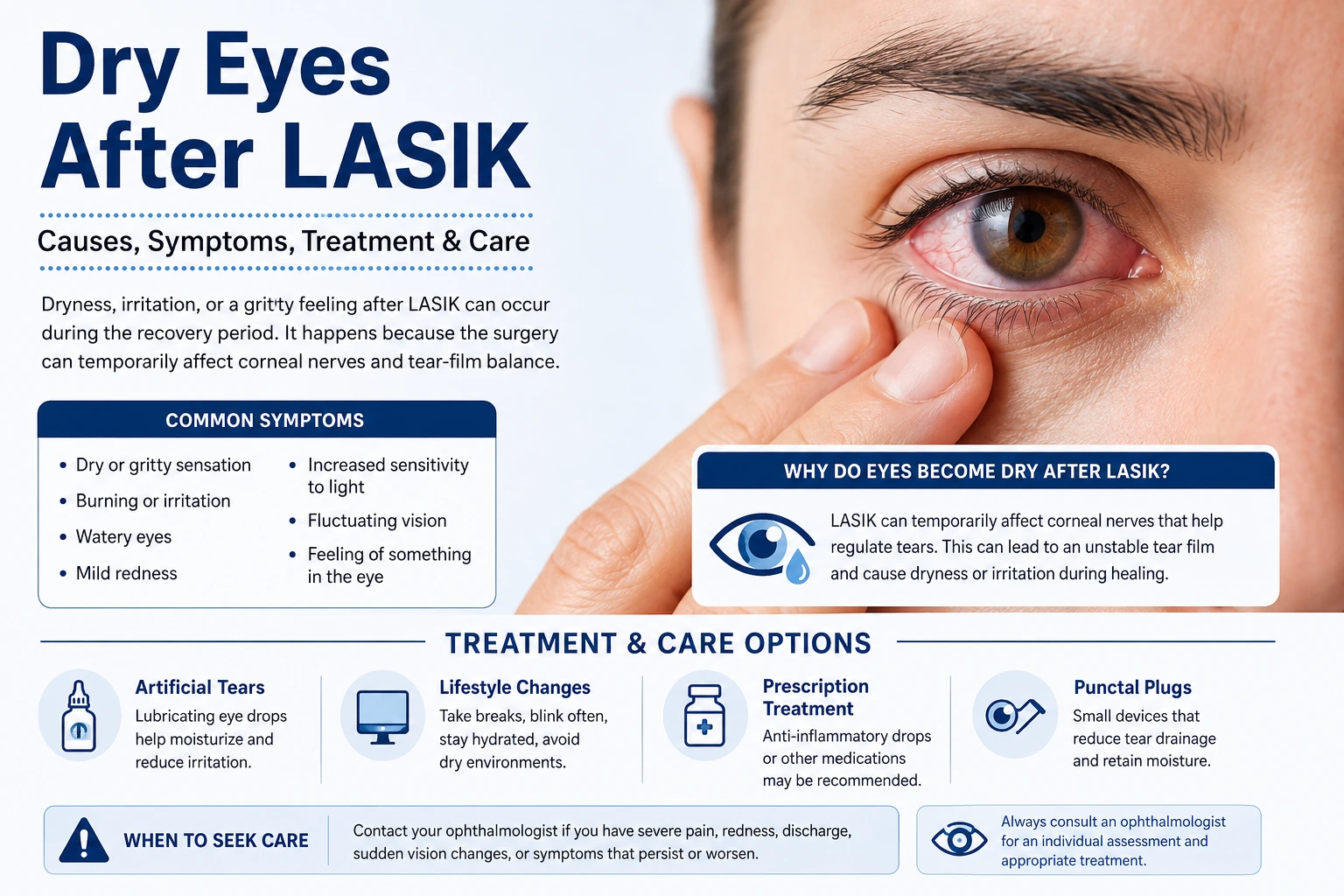
Dryness, irritation, or a gritty feeling after LASIK Eye Surgery can be concerning, especially when patients expect their vision to improve quickly. Dry eye symptoms can occur during the recovery period because LASIK can temporarily affect the nerves and tear-film balance of the cornea.
The severity and duration of dryness can vary from person to person. Some patients may experience mild symptoms for a limited period, while others may need additional evaluation and treatment. This is why post-LASIK symptoms should be discussed with an ophthalmologist rather than self-treated. If you are considering LASIK in Ambala, choosing the Best LASIK Hospital in Ambala should involve looking at proper eye evaluation, experienced ophthalmic care, and appropriate post-operative follow-up.
Why Do Eyes Become Dry After LASIK?
LASIK involves reshaping the cornea to correct refractive errors such as myopia, hyperopia, and astigmatism. During the procedure, some corneal nerves are affected temporarily. These nerves play a role in the normal feedback system that helps regulate tear production and the sensation of dryness.
As the cornea heals, this tear-film balance can temporarily change. As a result, some patients may experience:
- Dry or gritty sensation
- Burning or irritation
- Watery eyes
- Mild redness
- Increased sensitivity to light
- Fluctuating vision
- A feeling that something is present in the eye
These symptoms do not necessarily mean that LASIK has caused permanent damage. However, persistent or worsening symptoms require an eye examination.
Is Dry Eye Common After LASIK?
Dry eye symptoms can occur during the recovery period following laser vision correction. The experience is not identical for every patient.
The condition of the eyes before surgery can also matter. Patients who already have dry-eye symptoms, an unstable tear film, or other ocular-surface problems may require particular attention before and after LASIK.
A proper pre-operative assessment helps the ophthalmologist identify factors that could influence recovery.
What Can Increase the Risk of Dry Eyes After LASIK?
Several factors may contribute to post-LASIK dryness. These can include pre-existing dry eye, contact-lens use, certain environmental conditions, and individual differences in healing.
Spending long periods looking at digital screens may also reduce blinking and make existing dryness feel worse. Air conditioning, fans, dust, smoke, and low-humidity environments can further increase eye discomfort.
Because the cause and severity can vary, treatment should be based on an individual eye examination.
When Should You Seek Eye Care?
Mild dryness can occur during LASIK recovery, but patients should contact their ophthalmologist if symptoms are severe, persistent, worsening, or associated with a noticeable change in vision.
A professional evaluation can determine whether the symptoms are related to dry eye or another post-operative issue and whether treatment is needed.
How Is Dry Eye Diagnosed After LASIK?
If dryness continues after LASIK Eye Surgery, an ophthalmologist may examine the surface of the eye and assess the tear film to understand the underlying cause.
The evaluation may include a discussion of your symptoms and medical history, examination of the eye surface and eyelids, and tests that assess tear production or tear-film stability. Leelawati Hospital’s existing dry-eye service page mentions tests such as the Schirmer test and tear breakup time (TBUT) as part of dry-eye evaluation.
A proper assessment is important because not every case of post-LASIK discomfort is caused by the same problem. The treatment should therefore be selected according to the findings of the examination.
How Is Dry Eye After LASIK Treated?
Treatment depends on the severity and underlying cause of dryness. For some patients, simple measures may provide sufficient relief, while others may require additional treatment.
Common approaches may include:
Artificial Tears
Lubricating eye drops, often called artificial tears, can help supplement the natural tear film and reduce symptoms such as irritation, burning, or a gritty sensation. The choice and frequency of eye drops should be discussed with your ophthalmologist.
Lifestyle and Environmental Changes
Simple changes can help reduce discomfort, particularly when dryness is aggravated by environmental conditions or prolonged screen use.
Helpful measures may include:
- Taking regular breaks during screen use
- Remembering to blink frequently
- Staying adequately hydrated
- Avoiding direct exposure to fans or air conditioning
- Using a humidifier when the environment is particularly dry
- Protecting the eyes from wind and dust
These measures are also included among the dry-eye management recommendations published by Leelawati Hospital.
Prescription Treatment
If symptoms are more persistent or significant, an ophthalmologist may consider prescription treatment. Depending on the individual’s condition, this can include anti-inflammatory eye drops or other medications.
Patients should not start prescription eye drops on their own after LASIK. A doctor should determine whether they are appropriate.
Punctal Plugs
In selected cases, punctal plugs may be considered. These small devices help reduce tear drainage and can help retain tears on the surface of the eye.
How Long Does Dry Eye Last After LASIK?
The duration of dryness after LASIK is not the same for everyone. Some patients may experience symptoms temporarily during the healing period, while others may have symptoms that require continued management.
The course of recovery can depend on factors such as pre-existing dry eye, the condition of the ocular surface, individual healing, and environmental factors.
If dryness is not improving or is affecting your daily activities, a follow-up examination is important rather than simply waiting for the symptoms to disappear.
Can You Prevent Dry Eyes After LASIK?
Dryness cannot always be completely prevented, but discussing your eye health before surgery can help identify factors that may increase the likelihood of symptoms.
If you already experience dry eyes, tell your ophthalmologist during the LASIK consultation. Pre-existing ocular-surface problems may need to be evaluated and managed before proceeding with laser vision correction.
Good screen habits, adequate hydration, avoiding excessive exposure to dry air, and following your ophthalmologist’s post-operative instructions can also support comfortable recovery.
When Should You Contact an Eye Specialist?
Contact your ophthalmologist if you experience persistent or worsening dryness after LASIK, particularly if it is accompanied by significant pain, marked redness, discharge, or a noticeable change in vision.
Post-operative symptoms should be assessed individually. Do not assume that every symptom is simply part of normal LASIK recovery.
Related Eye-Care Services at Leelawati Hospital
If you are experiencing dryness after laser vision correction, you can learn more about Dry Eye Treatment at Leelawati Hospital. The hospital provides evaluation and treatment options for dry-eye conditions, which may include lubricating eye drops, prescription medication, lifestyle measures, punctal plugs, and other appropriate therapies.
Similarly, patients considering or recovering from LASIK Eye Surgery can learn more about laser vision correction, eligibility, and related post-operative care through Leelawati Hospital’s Laser Eye Surgery service.
These service pages can help patients understand the available treatment options before discussing their individual eye condition with a qualified ophthalmologist.
Can Dry Eyes Affect LASIK Recovery?
Dryness can make the recovery period less comfortable for some patients. Temporary fluctuations in vision may also occur when the tear film is unstable because a healthy tear film helps maintain a smooth optical surface.
This does not mean that every patient with dry eyes will have a poor LASIK outcome. Recovery varies according to individual eye health, the condition of the ocular surface, and the healing process.
Following the ophthalmologist’s instructions and attending scheduled follow-up examinations are important after LASIK Eye Surgery.
When Should You Seek Medical Attention?
Mild dryness may occur during recovery, but certain symptoms should not be ignored. Contact your eye specialist if you experience:
- Increasing or severe eye pain
- Significant redness
- Discharge from the eye
- Sudden or noticeable reduction in vision
- Persistent symptoms that are not improving
- Increasing sensitivity to light
These symptoms may require prompt examination to determine their cause.
Frequently Asked Questions
Is dry eye normal after LASIK?
Dryness can occur during the recovery period after LASIK. The severity and duration vary between patients. Persistent or worsening symptoms should be evaluated by an ophthalmologist.
How long does dry eye last after LASIK?
There is no fixed duration for everyone. Some patients experience temporary symptoms, while others may require ongoing management. Your recovery depends on your individual eye health and healing.
Can artificial tears help after LASIK?
Lubricating eye drops may help relieve dryness and irritation. Your ophthalmologist can recommend an appropriate eye drop and explain how frequently it should be used.
Can I use any eye drops after LASIK?
It is better not to use eye drops without professional advice, particularly during the post-operative period. Your ophthalmologist can recommend the appropriate medication or lubricating drops.
Can pre-existing dry eyes affect LASIK?
Pre-existing dry eye may be an important consideration before LASIK. A thorough examination can help identify ocular-surface problems and determine whether they should be managed before surgery.
When should I see an ophthalmologist for dry eyes after LASIK?
If dryness is persistent, worsening, significantly affecting your vision or daily activities, or associated with pain, redness, discharge, or a noticeable change in vision, seek an eye examination.
About Leelawati Eye Super Speciality Hospital
Leelawati Eye Super Speciality Hospital provides comprehensive eye-care services, including LASIK and laser eye surgery as well as evaluation and treatment for dry-eye conditions.
Patients experiencing dryness after LASIK can undergo an appropriate eye examination to identify the possible cause and discuss suitable treatment options.
For more information about the hospital’s eye-care services:
Website: Leelawati Eye Super Speciality Hospital
LASIK / Laser Eye Surgery: Laser Eye Surgery at Leelawati Hospital
If you are considering LASIK or experiencing persistent dryness after surgery, consult a qualified ophthalmologist for an individual assessment.
Follow Leelawati Eye Super Speciality Hospital
- Facebook: https://www.facebook.com/lwhamb
- Instagram:https://www.instagram.com/leelawati.hospital/
- YouTube: https://www.youtube.com/channel/UCzIJnUXZRRQjx_W5Kfu6a6g
- Google Business Profile: https://maps.app.goo.gl/pFeMCHTvyK3xPrDQ9
Conclusion
Dry Eyes After LASIK can occur during the healing period because the procedure can temporarily affect corneal nerves and tear-film regulation. Symptoms may include dryness, irritation, burning, watering, light sensitivity, or fluctuating vision.
The right approach is not to assume that all post-LASIK dryness is the same. A proper eye examination can help identify the cause and determine whether lubricating drops, lifestyle measures, prescription treatment, or other dry-eye therapies are appropriate. If you are experiencing persistent dryness after Laser Eye Surgery, speak with an ophthalmologist rather than continuing self-treatment.
Medical Disclaimer: This article is intended for general informational and educational purposes only. It does not replace a professional eye examination, diagnosis, or medical advice. LASIK recovery and dry-eye symptoms can vary between individuals. Always consult a qualified ophthalmologist for personalised medical advice.
