
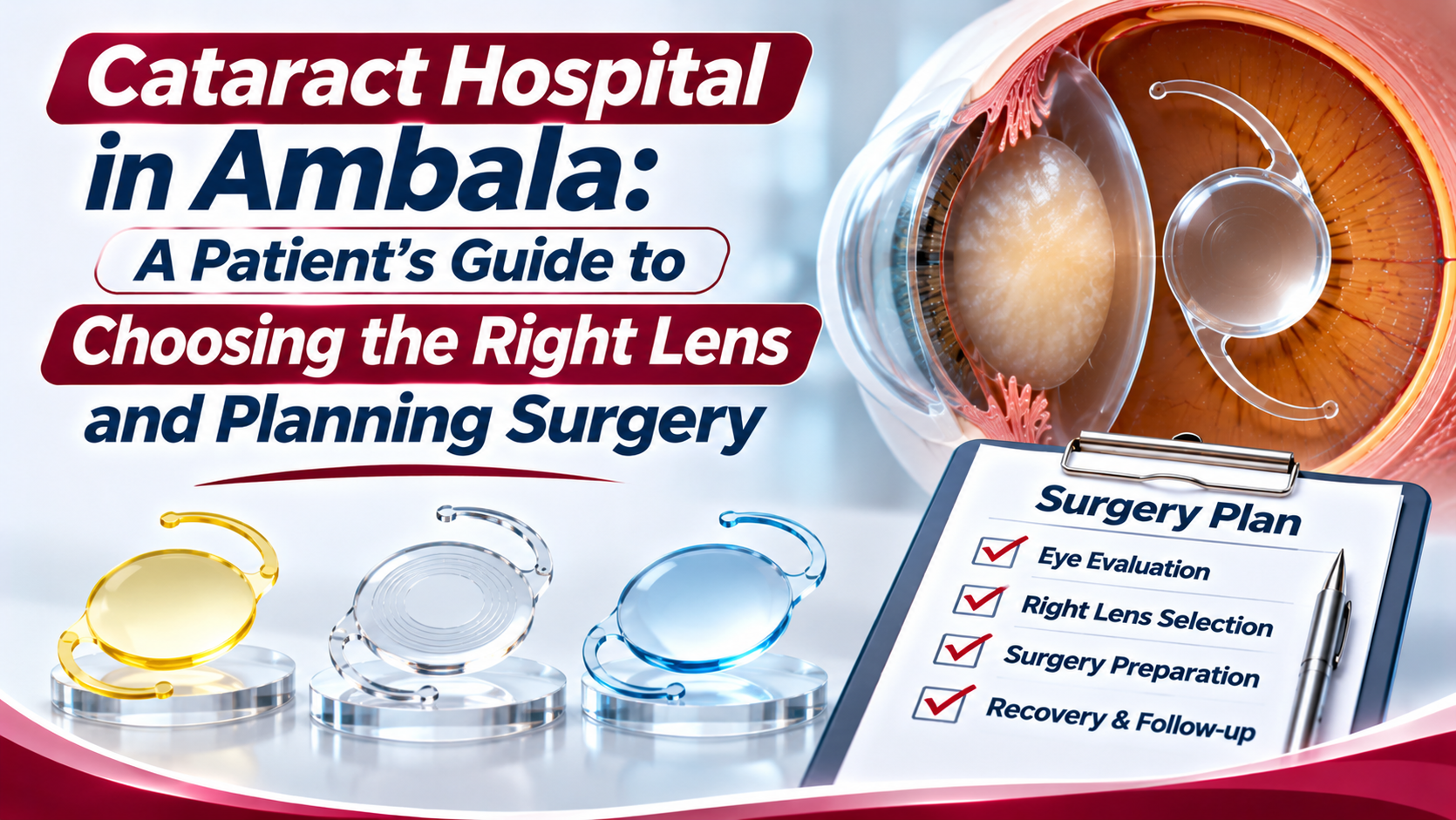
A cataract diagnosis often raises two questions at once: “Do I need surgery now?” and “Which lens will suit my eyes and daily routine?” Those questions matter more than a hospital advertisement or a complicated technology label. A thoughtful cataract consultation should help you understand what is affecting your sight, whether it is time to operate, which intraocular lens (IOL) is appropriate and what recovery might look like in your circumstances.
If you are searching for a cataract hospital in Ambala, this guide offers a practical way to prepare for that conversation. It focuses on decisions patients frequently find difficult: understanding preoperative measurements, weighing different lens options, asking about other eye conditions and knowing what to confirm before booking surgery. It also explains the cataract-related services described on Leelawati Hospital’s official website, without suggesting that one treatment suits everyone.
Start with the question that matters: Is the cataract affecting your life?
A cataract is clouding of the eye’s natural lens. It usually develops gradually, and the impact is different for each person. An older adult who enjoys reading may notice that printed words need stronger light. Someone who drives in the evening may find oncoming headlights uncomfortable. Another person may struggle to recognize faces or notice that colours appear less vivid.
The decision to operate is not based on age alone, and every cataract does not require immediate surgery. An ophthalmologist considers your symptoms, vision test results, the condition of the eye and the activities you want to do safely and comfortably. Early on, a change in glasses or improved lighting may help. Surgery is the treatment that removes the cloudy lens, but the timing should be agreed after a proper examination.
Tell the eye specialist about specific difficulties rather than only saying that your vision is “weak.” Explain whether you struggle with road signs, stitching, reading your phone, working at a computer, steps and stairs, or night-time glare. This information helps connect clinical findings with your actual needs.
What should a cataract hospital in Ambala assess before recommending an IOL?
A clear diagnosis is only the beginning. The next step is to find out whether the cataract explains most of the vision loss and whether another eye condition could influence the result. Cataract surgery removes lens clouding, but it does not automatically reverse vision damage caused by glaucoma, retinal disease or another separate problem.
A comprehensive examination, not only a spectacle-power check
Your consultation may include distance and near vision testing, refraction, an examination of the front of the eye and a dilated look at the retina when appropriate. The doctor may measure eye pressure and assess the optic nerve. If diabetes, glaucoma, macular disease or previous eye surgery is part of your history, further tests may be advised.
Some people arrive with symptoms that resemble a cataract but have more than one cause. For example, both cataract and diabetic retinal disease can reduce visual clarity. When the doctor explains what each condition contributes to your sight, it becomes easier to form realistic expectations for surgery.
Biometry: why a few measurements matter so much
Before an artificial lens can be selected, your eye needs measurements. Biometry evaluates factors such as eye length, while corneal measurements help estimate the focusing power needed for the IOL. Accurate measurements are especially important when astigmatism is present or when a patient is considering a lens intended to reduce dependence on glasses.
Ask whether dry eye, an irregular cornea, earlier LASIK or other eye conditions might affect the calculations. Sometimes the ocular surface needs attention or measurements need repeating before a final lens decision. A careful plan can be more valuable than rushing to choose a lens by brand or price alone.
The importance of discussing the retina and optic nerve
If you have diabetes, inform your ophthalmologist even if your vision appears stable. Retinal changes sometimes occur without obvious symptoms. The hospital lists diabetic retinopathy care among its eye services; its information page is available at https://leelawatihospital.net/departments/eye-surgery/diabetic-retinopathy/.
Glaucoma also deserves attention because damage to the optic nerve may limit vision independently of cataract. A doctor may need to review eye pressure, medications and overall glaucoma status when planning surgery. These conditions do not always rule out cataract surgery; they can change the investigations, lens discussion, counselling and follow-up needed.
Understanding cataract lens choices without confusing terminology
The artificial lens placed during cataract surgery is called an intraocular lens, or IOL. It replaces the natural lens that has become cloudy. Different designs provide different focusing characteristics. None is universally suitable, and a lens marketed as “premium” is not automatically the right choice for your eye.
Monofocal IOL: one selected focusing distance
A monofocal IOL is generally designed to provide clearer focus at one distance. It is often selected for distance vision, with reading glasses used for near tasks. For some people, predictable distance focus and a willingness to wear glasses for reading are an appropriate combination. The exact result still depends on eye health and the planned lens power.
If you spend considerable time reading or doing close work, ask which distance the surgeon plans to target and what spectacles you may need after healing. It is worth discussing your preferred activities before the operation rather than assuming every new lens eliminates glasses.
Toric IOL: an option when astigmatism is significant
Astigmatism occurs when the eye’s focusing surfaces do not curve evenly. A toric IOL can be designed to help correct corneal astigmatism during cataract surgery. The benefit depends on measurements, suitable eye anatomy and precise alignment of the lens. A toric option is not necessary for every patient, and glasses may still be required for some activities.
Ask whether your astigmatism is regular, whether a toric design is suitable and how much residual spectacle power might remain. It is also reasonable to discuss the additional cost, if any, and the alternative of using spectacles after surgery.
EDOF IOL: extending the range of functional focus
An extended depth-of-focus (EDOF) IOL aims to increase the useful range of vision compared with a conventional single-focus design. Depending on the lens and the individual eye, it may help with intermediate activities such as viewing a computer or a vehicle dashboard. Fine print and prolonged close reading can still require glasses.
Patients should ask about contrast sensitivity, night-time visual symptoms, the limits of near vision and suitability when another eye disease is present. The right conversation is about trade-offs and daily priorities, not a promise of spectacle independence.
Trifocal IOL: multiple focusing distances with trade-offs
A trifocal IOL is designed to offer focus at distance, intermediate and near ranges. For selected patients, this can reduce reliance on glasses across several tasks. However, some people notice halos, glare or reduced contrast in certain lighting conditions. Those effects and the possible need for spectacles should be discussed before choosing the lens.
Suitability depends on the ocular surface, cornea, retina, visual expectations and willingness to accept trade-offs. Someone who frequently drives at night may have different priorities from someone who mainly wants to read comfortably at home.
Leelawati Hospital’s published profile of ophthalmology specialist Dr Rajat Mathur lists phacoemulsification with IOL implantation and trifocal, EDOF and toric IOL options among his services. This confirms that those lens categories are described by the hospital, but the actual recommendation must follow an examination. The specialist profile is available at https://leelawatihospital.net/the-founder/.
A practical way to compare lens options at your consultation
Instead of asking, “Which lens is the most advanced?”, describe your week. Do you work on a laptop for long hours? Read small text? Drive after dark? Use your phone frequently? Spend time outdoors? Do needlework? Are you comfortable wearing reading glasses, or is reducing their use a priority?
Your answers should be considered alongside eye measurements and the presence of other eye disease. For example, a patient with substantial astigmatism may benefit from a different discussion than someone with minimal astigmatism. A patient with macular disease may need more cautious expectations about multifocal-type optics. Two people of the same age can make different, equally reasonable lens choices.
A useful comparison covers four points: what distance the lens is meant to correct; which tasks may still need glasses; possible effects such as glare or halos; and the full cost of the planned procedure. Ask the surgeon to explain the likely benefit for your particular eyes rather than quoting a general outcome.
Cataract surgery method: what patients should understand
In modern cataract surgery, the cloudy natural lens is removed and an IOL is placed inside the eye. Phacoemulsification commonly uses ultrasound to break the cataract into small pieces so they can be removed through a small incision. Some cases may use other methods depending on cataract density, eye structure and clinical circumstances.
Laser-assisted steps are available in some surgical settings, but a laser label alone does not establish that one approach is preferable for every patient. Ask your surgeon which technique is proposed, why it suits your eye and whether there are any relevant alternatives. The method and the IOL are separate decisions: the surgical technique describes how the cataract is removed, whereas the lens choice affects postoperative focusing.
The hospital’s cataract information page explains its published cataract surgery offering and general preparation and follow-up topics: https://leelawatihospital.net/departments/eye-surgery/cataract-surgery/. Use this page for the service overview and the consultation for decisions specific to your case.
Special considerations for patients with diabetes, glaucoma or dry eyes
If you have diabetes
The eye specialist may want to assess the retina before surgery, particularly if your blood sugar has been difficult to manage or if you have previously received retinal treatment. Macular swelling or diabetic retinopathy can influence the visual result and may affect the timing and follow-up plan. Bring your medication list and relevant medical reports. Diabetes does not automatically mean cataract surgery is impossible; planning should reflect your individual health and retinal findings.
If you have glaucoma
Tell the surgeon about all pressure-lowering drops, prior glaucoma procedures and any visual field or optic nerve test results. Cataract and glaucoma affect different parts of the eye. Removing the cataract may improve optical clarity, but it does not restore optic nerve tissue already damaged by glaucoma. Some patients may need additional discussion about pressure control and postoperative monitoring.
If your eyes feel dry or irritated
A fluctuating tear film can make the vision feel inconsistent and may interfere with certain measurements used for IOL calculations. Mention burning, grittiness, watering and variable blur. Your surgeon may recommend stabilising the ocular surface first. If eye drops are prescribed, use them only as directed and tell your doctor about any drops you already take.
Questions to ask before you schedule cataract surgery
A useful cataract consultation leaves you with more clarity, not simply an appointment date. Consider bringing a family member who can help remember the advice, especially if you have several medical conditions or find the choices overwhelming.
Ask what is causing your reduced vision and whether the cataract is the main cause. Confirm whether both eyes need treatment and how the timing will be decided. Ask which lens power and lens category are being recommended, what alternatives exist and how your current spectacle prescription, cornea or retina influence that choice. Discuss whether you should expect to wear glasses for reading, driving or computer work.
You should also understand the planned surgical technique, the major risks relevant to your eye, required drops, expected follow-up visits, the first-day transport arrangement and warning signs after the operation. If you take blood thinners, diabetes medicines or other regular prescriptions, mention them rather than stopping anything independently.
Finally, request a written explanation of the anticipated fees, including the IOL, investigations, hospital charges and follow-up costs. If insurance or a cashless arrangement is relevant, confirm eligibility and preauthorisation directly with the hospital and insurer before making financial decisions.
Preparing for surgery: a patient-friendly checklist
The hospital team will provide instructions tailored to the planned procedure, and those instructions take priority over a general internet checklist. In the days leading up to surgery, make sure the team has an accurate list of medical conditions, medicines, allergies and previous eye procedures. Mention any new eye redness, infection, fever or unexpected change in health.
Confirm whether preoperative drops are required and exactly when to begin them. Ask about food and drink restrictions because these can vary with the anaesthesia and medical plan. Arrange someone to accompany you home, as you should not plan to drive yourself immediately after eye surgery. If you wear contact lenses, ask whether they must be stopped before final measurements.
On the surgery day, carry your records, current medicines or medication list, identity and payment documents, and the contact details of your accompanying person. Do not change prescribed medicines unless the treating clinician has advised it. A short written list of questions can prevent important details from being forgotten during a busy hospital visit.
Recovery is a process, not a single deadline
Vision may begin improving in the early days after cataract surgery, but the pace varies. Some blur, light sensitivity or mild irritation may occur during recovery. Healing and stabilisation can take several weeks. The quality of sight also depends on other eye conditions and the IOL selected, so comparisons with relatives or friends can be misleading.
Use postoperative drops exactly as prescribed and attend the planned reviews. Avoid rubbing or pressing on the operated eye. Ask when you may resume bathing, face washing, exercise, lifting, cooking, office work and driving. General advice on these activities cannot replace the operating surgeon’s instructions because your eye and procedure may have specific requirements.
Severe or increasing pain, marked redness, sudden deterioration in vision, new flashes, many new floaters or a dark curtain across the field of vision need urgent medical assessment. Do not wait for the routine follow-up appointment if alarming symptoms occur. If the hospital cannot be reached promptly, seek emergency ophthalmic care.
What influences the cost of cataract surgery in Ambala?
A quotation can vary because of the investigations required, the cataract’s complexity, the selected IOL, the surgical approach, medical conditions and the services included in the package. A higher-priced lens is not necessarily more suitable for your eyes. Likewise, a lower quotation is difficult to compare unless the inclusions and exclusions are clear.
Ask for a breakdown that separates the consultation and preoperative tests, surgeon or procedure charges, IOL cost, medications, follow-up and any extra cost related to unexpected clinical needs. If you have private insurance, a government scheme or TPA coverage, check the current policy rules, room or implant limits, documentation, exclusions and approval status. The hospital describes cashless mediclaim services on its website, but actual approval is case-specific and must be confirmed before treatment.
This financial conversation is part of informed care. It allows families to compare the same components and choose an option based on clinical suitability as well as affordability, without relying on advertised packages that may not describe individual requirements.
Cataract care at Leelawati Hospital in Ambala City
Leelawati Eye Super Specialty Hospital lists cataract surgery among its ophthalmology services. Its official website identifies Dr Rajat Mathur as an ophthalmology specialist and lists phacoemulsification, cataract management and several IOL categories in his professional profile. The hospital is located on Police Line Road near Arya Chowk in Ambala City, Haryana.
For patients arranging an evaluation, the appropriate first step is to request an eye consultation and explain whether the main concern is gradual blur, glare, difficulty reading or a previously diagnosed cataract. The clinician can then assess whether further tests, treatment for another eye problem or cataract surgery planning is needed. You can check the hospital’s contact information at https://leelawatihospital.net/contact/.
A hospital consultation should provide the facts you need to make a considered decision. There is no universal lens, recovery schedule or surgery date that applies to every person. Good planning joins together your eye findings, visual needs, medical history and informed preferences.
Frequently asked questions about cataract hospital consultations in Ambala
1. Can a cataract be diagnosed without dilating the pupils?
A doctor may identify lens clouding during an eye examination, but pupil dilation can help assess the cataract and examine the retina. Whether dilation is needed at a particular visit depends on the clinical assessment. Ask whether you should arrange transport if your pupils will be dilated.
2. Is a cataract lens selected according to age?
Age is only one consideration. Corneal shape, eye length, astigmatism, retinal and optic nerve health, preferred activities and expectations about glasses all matter. Your surgeon uses measurements and a discussion of your goals to recommend an IOL.
3. Can someone with diabetes choose a trifocal lens?
It depends on the retinal condition and overall eye health. Diabetic retinal or macular changes may influence whether a multifocal-type optic is appropriate. A complete retinal assessment and a discussion of visual trade-offs are important before deciding.
4. Does every patient with astigmatism need a toric IOL?
No. The amount and type of astigmatism, measurement reliability, desired outcome and cost all influence the choice. Some people may manage remaining astigmatism with spectacles. Ask your surgeon to explain the expected difference for your eye.
5. Should I treat dry eyes before cataract lens measurements?
Dry eye can sometimes make corneal measurements less consistent. If your tear film is unstable, your doctor may advise treatment and repeat measurements before finalising the lens calculation. Do not start prescription drops without medical advice.
6. If one eye has a cataract, must both eyes undergo surgery together?
No. The need and timing for each eye are assessed separately. If both eyes require surgery, the surgeon will explain the proposed sequence based on vision, eye health and practical recovery considerations.
7. Can I keep taking my diabetes or blood-pressure medicines before surgery?
Tell the hospital about every medicine you take. The team will advise which medicines to continue and whether any adjustment is needed for the procedure and anaesthesia plan. Never stop or alter regular medicines on your own.
8. Will cataract surgery correct vision loss caused by glaucoma?
Removing a cataract can improve blur caused by lens clouding, but it does not undo established optic nerve damage from glaucoma. The ophthalmologist should explain which part of your visual difficulty may improve and what monitoring remains necessary.
9. What should I do if vision suddenly becomes worse after the operation?
Sudden vision loss, severe pain, pronounced redness, flashes, new floaters or a shadow in your vision need urgent assessment. Contact the operating team immediately or seek emergency ophthalmic care if you cannot reach them.
10. What documents should I carry for an insurance-related cataract consultation?
Carry your identity details, insurance or scheme card, previous medical and eye reports, medication list and any preauthorisation paperwork you already have. Ask the hospital which additional documents the insurer or TPA needs and obtain confirmation of coverage before surgery.
Book a cataract evaluation in Ambala
Leelawati Hospital, 8–9 Police Line Road, near Arya Chowk, Ambala City, Haryana 134003, India. Phone: 0171 255 0456. Website: https://leelawatihospital.net/. The website lists outpatient hours as Monday to Saturday, 9:30 AM to 6:30 PM, with Sunday closed; please confirm the current doctor schedule and appointment availability by phone before travelling.
Conclusion: choose clarity about your care, not just a lens name
Finding a cataract hospital in Ambala is the beginning of a medical decision, not the end of one. A meaningful consultation should clarify why your sight has changed, whether the cataract is ready for surgery, how other eye conditions affect expectations and which IOL fits your day-to-day needs. Discuss benefits, limitations, risks, cost and follow-up in plain language. The more specific your questions, the more useful the treatment plan can be.
