
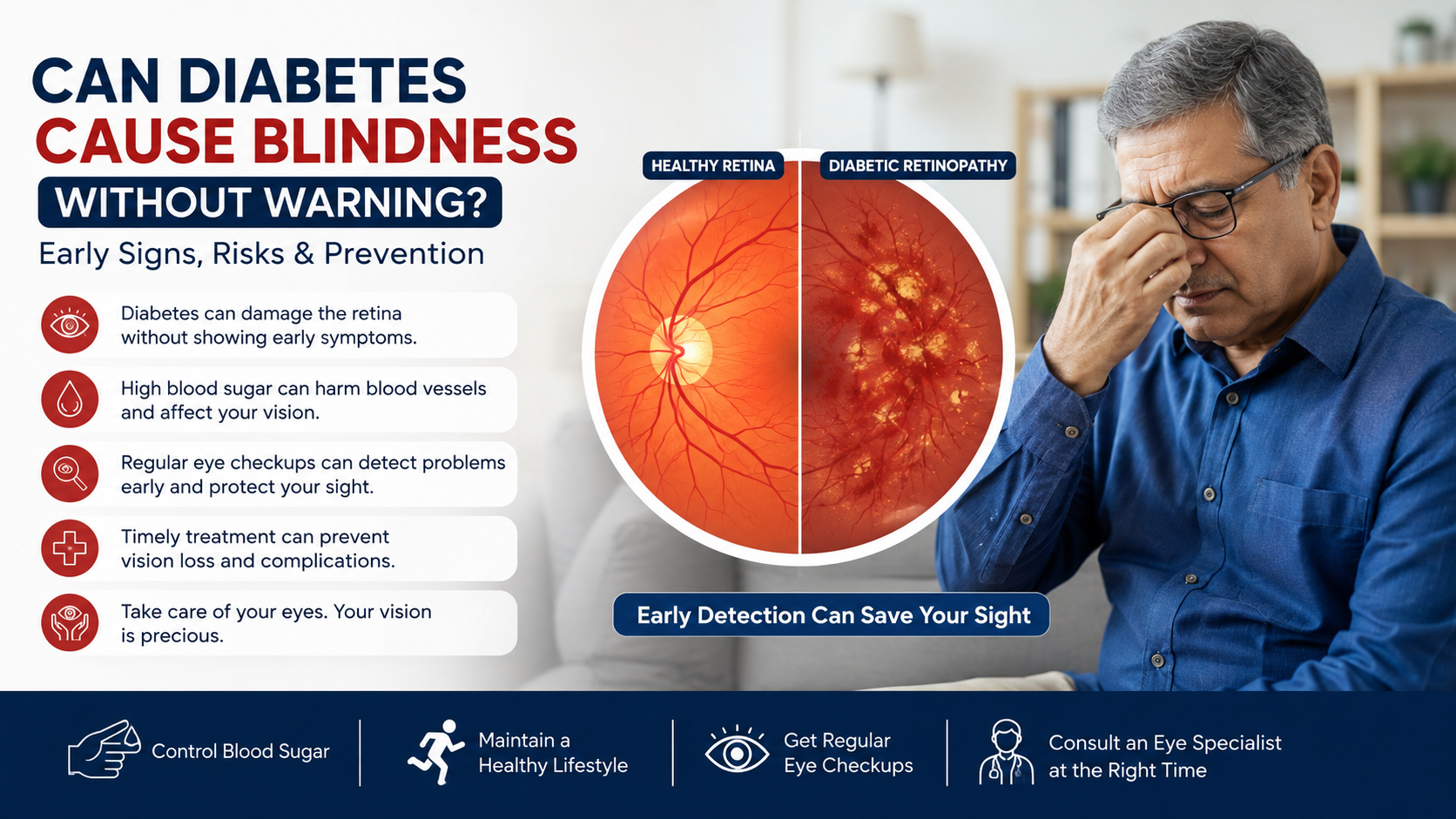
Yes, diabetes can cause serious vision problems without showing early warning signs. Many people with diabetes continue their daily activities normally because their eyesight appears fine, while hidden damage may already be developing inside the eyes.
High blood sugar levels over a long period can damage the tiny blood vessels of the retina, the light-sensitive layer at the back of the eye. This condition is known as diabetic retinopathy. If it is not detected and treated at the right time, it can lead to severe vision loss and, in advanced cases, blindness.
The biggest challenge with diabetic eye disease is that it often progresses silently. This is why regular eye examinations and early diagnosis are essential for protecting your eyesight.
People with diabetes should undergo regular retinal examinations to detect early retinal damage before it affects vision. If you are looking for expert Retina Treatment in Ambala, consult an experienced Retina Doctor in Ambala at a trusted Retina Hospital in Ambala for timely diagnosis and personalised care.
How Does Diabetes Affect Your Eyes?
Diabetes affects the body by increasing blood sugar levels. When glucose remains high for a long time, it can damage small blood vessels throughout the body, including the delicate blood vessels inside the retina.
The retina plays an important role in vision. It captures light and sends signals to the brain, helping you see objects clearly. When diabetes damages retinal blood vessels, several problems can occur:
- Blood vessels may become weak and leak fluid or blood.
- The retina may become swollen.
- Oxygen supply to the retina may reduce.
- Abnormal blood vessels may start growing.
These changes can gradually affect vision. In the beginning, a person may not notice any symptoms, but the damage can continue progressing.
What Is Diabetic Retinopathy?
Diabetic retinopathy is a diabetes-related eye condition that affects the retina. It occurs when prolonged high blood sugar damages the blood vessels that supply the retina.
There are mainly two stages of diabetic retinopathy:
1. Non-Proliferative Diabetic Retinopathy (Early Stage)
This is the initial stage of the disease. During this stage:
- Small blood vessels in the retina become weak.
- Tiny bleeding spots may appear.
- Fluid leakage may occur.
- Vision may still remain normal.
Many patients do not realize they have diabetic retinopathy during this stage because there may be no noticeable symptoms.
Regular Diabetic Eye Checkup helps detect these early changes before they become advanced.
2. Proliferative Diabetic Retinopathy (Advanced Stage)
If diabetic retinopathy continues to progress, the retina may not receive enough oxygen. As a result, the eye may start developing abnormal new blood vessels.
These blood vessels are fragile and can cause:
- Bleeding inside the eye
- Scar tissue formation
- Retinal detachment
- Permanent vision loss
Why Can Diabetes Damage Eyes Without Symptoms?
A common question among diabetic patients is:
“If my eyesight is clear, does that mean my eyes are healthy?”
The answer is not always yes.
Diabetic eye damage often starts inside the retina, where changes cannot be felt or seen without proper examination.
Many patients do not experience:
- Eye pain
- Redness
- Immediate vision changes
Because of this, they may delay visiting an eye specialist. Unfortunately, by the time symptoms appear, the condition may already be more advanced.
Regular eye screening is the best way to identify problems early.
A trusted Retina Hospital in Ambala can provide comprehensive retinal evaluation, advanced diagnostic imaging, and expert Retina Treatment in Ambala to monitor and manage diabetes-related eye conditions.
Early Warning Signs of Diabetic Retinopathy
Although diabetic retinopathy may not show symptoms in the beginning, some warning signs should never be ignored.
1. Blurred Vision
Blurred vision is one of the most common symptoms of diabetic eye problems.
It can happen because of:
- Retinal swelling
- Fluid leakage
- Changes in blood sugar levels
- Diabetic macular edema
If blurry vision continues or keeps returning, diabetic patients should get a detailed eye examination.
2. Floaters or Dark Spots
Floaters appear as small dots, shadows, or shapes moving in your vision.
While occasional floaters may be harmless, sudden appearance of many floaters can indicate bleeding inside the eye.
Seek medical advice if you notice:
- Sudden increase in floaters
- Dark spots blocking your vision
- Shadow-like areas
3. Difficulty Seeing at Night
Some diabetic patients experience problems with night vision.
Signs may include:
- Difficulty seeing in low light
- Trouble driving at night
- Slow adjustment between bright and dark environments
These changes may indicate problems affecting retinal function.
4. Sudden Vision Changes
Sudden changes in eyesight require immediate attention.
Warning signs include:
- Sudden blurry vision
- Loss of vision in part of the eye
- Flashes of light
- Curtain-like shadow over vision
These symptoms may indicate serious retinal complications.
How Is Diabetic Retinopathy Diagnosed?
A normal vision test is not enough to detect diabetic eye disease. A detailed retinal examination is required.
Eye specialists may recommend:
Dilated Eye Examination
Special eye drops are used to enlarge the pupil, allowing the doctor to examine the retina clearly.
This helps detect:
- Blood vessel damage
- Bleeding
- Swelling
- Retinal changes
Optical Coherence Tomography (OCT) Scan
OCT is an advanced imaging test that provides detailed images of the retina.
It helps detect:
- Retinal swelling
- Fluid accumulation
- Macular changes
This test is especially useful for monitoring diabetic macular edema.
Digital Retinal Imaging
Retinal photographs help doctors:
- Record retinal health
- Compare changes over time
- Monitor disease progression
Early diagnosis allows timely treatment and better vision outcomes.
Treatment Options for Diabetic Eye Problems
Treatment depends on the stage of diabetic retinopathy and the amount of retinal damage.
Regular Monitoring
In early stages, doctors may recommend regular follow-ups along with better diabetes control.
Anti-VEGF Injections
Anti-VEGF injections help reduce abnormal blood vessel growth and control swelling in the retina.
They are commonly used for:
- Diabetic macular edema
- Advanced diabetic retinopathy
Laser Treatment
Laser therapy may be recommended to reduce leakage and prevent further retinal damage.
Surgery
In advanced cases involving severe bleeding or retinal complications, procedures like vitrectomy surgery may be required.
The right treatment depends on a detailed retinal evaluation by an eye specialist.
How Can You Prevent Diabetes-Related Vision Loss?
Although diabetes increases the risk of eye problems, many complications can be prevented with proper care.
Follow these steps:
Maintain Blood Sugar Control
Keeping blood glucose levels within the recommended range helps protect retinal blood vessels.
Get Regular Eye Examinations
Do not wait for symptoms. Regular screening helps detect problems early.
Control Blood Pressure and Cholesterol
Both can increase the risk of diabetic eye complications.
Follow a Healthy Lifestyle
Include healthy food choices, regular exercise, and avoid smoking.
Follow Your Doctor’s Advice
Complete prescribed treatment and attend follow-up appointments.
Why Choose Leelawati Hospital for Diabetic Eye Care?
Managing diabetic eye problems requires accurate diagnosis, advanced technology, and experienced eye specialists.
At Leelawati Hospital, patients can benefit from:
- Comprehensive diabetic eye evaluation
- Advanced retinal imaging
- Expert ophthalmology care
- Personalized treatment plans
- Modern treatment approaches
Choosing the right eye care centre helps protect your vision and ensures timely management of diabetes-related eye conditions.
Frequently Asked Questions (FAQs)
Can diabetes cause blindness without warning?
Yes. Diabetic retinopathy can develop silently without noticeable symptoms in the early stages. Regular eye examinations are important for early detection.
How often should diabetic patients get an eye checkup?
Most diabetic patients require regular retinal examinations as advised by their eye specialist. The frequency depends on diabetes duration and eye condition.
Can diabetic retinopathy be cured completely?
Diabetic retinopathy may not always be completely reversed, but early diagnosis and proper treatment can help control the condition and protect vision.
What doctor treats diabetic retinopathy?
An ophthalmologist or retina specialist evaluates and treats diabetic retinopathy and related retinal problems.
Is blurry vision always a sign of diabetic retinopathy?
No. Blurry vision can happen due to many reasons, including cataracts, dry eyes, blood sugar fluctuations, or other eye conditions. A complete eye examination helps identify the exact cause.
Conclusion
Diabetes can affect your eyesight silently, but vision loss is not unavoidable. The key to protecting your eyes is early detection, regular diabetic eye checkups, and timely treatment.
If you have diabetes, do not wait until vision problems appear. A routine retinal examination can detect early changes and help prevent serious complications.
If you have diabetes or notice changes in your vision, don’t delay your eye examination. At Leelawati Hospital, our experienced Retina Doctors in Ambala provide comprehensive Retina Treatment in Ambala using advanced diagnostic technology to detect and manage retinal conditions at an early stage. As a trusted Retina Hospital in Ambala, we are committed to helping patients protect their vision through timely diagnosis and personalised retinal care.
Connect With Leelawati Hospital for Expert Eye Care
For regular eye care updates, health tips, and information about advanced eye treatments, you can connect with Leelawati Hospital through our official online platforms.
Patients can explore our services, read patient reviews, and get updated information through:
Address:
8–9, Police Line Road, Near Arya Chowk, Ambala City, Haryana – 134003
Phone:
0171-2550456, 0171-2550446
Website:
Google Business Profile:
https://share.google/9P4S0tKtF9L2xw295
Follow Leelawati Eye Super Speciality Hospital
Facebook: https://www.facebook.com/lwhamb
Instagram:https://www.instagram.com/leelawati.hospital/
YouTube: https://www.youtube.com/channel/UCzIJnUXZRRQjx_W5Kfu6a6g
Following our official platforms helps patients stay informed about eye health awareness, treatment options, hospital updates, and expert eye care services.
Medical Disclaimer
The information provided in this blog is for general educational and awareness purposes only. It should not be considered a substitute for professional medical advice, diagnosis, or treatment.
Every patient’s eye condition, diabetes level, and treatment requirements may be different. If you experience vision changes, eye discomfort, or symptoms related to diabetic eye problems, consult a qualified ophthalmologist or retina specialist for proper evaluation.
Leelawati Hospital does not recommend self-diagnosis or self-medication based only on the information provided in this article. Always seek professional medical guidance for personalized eye care.
