
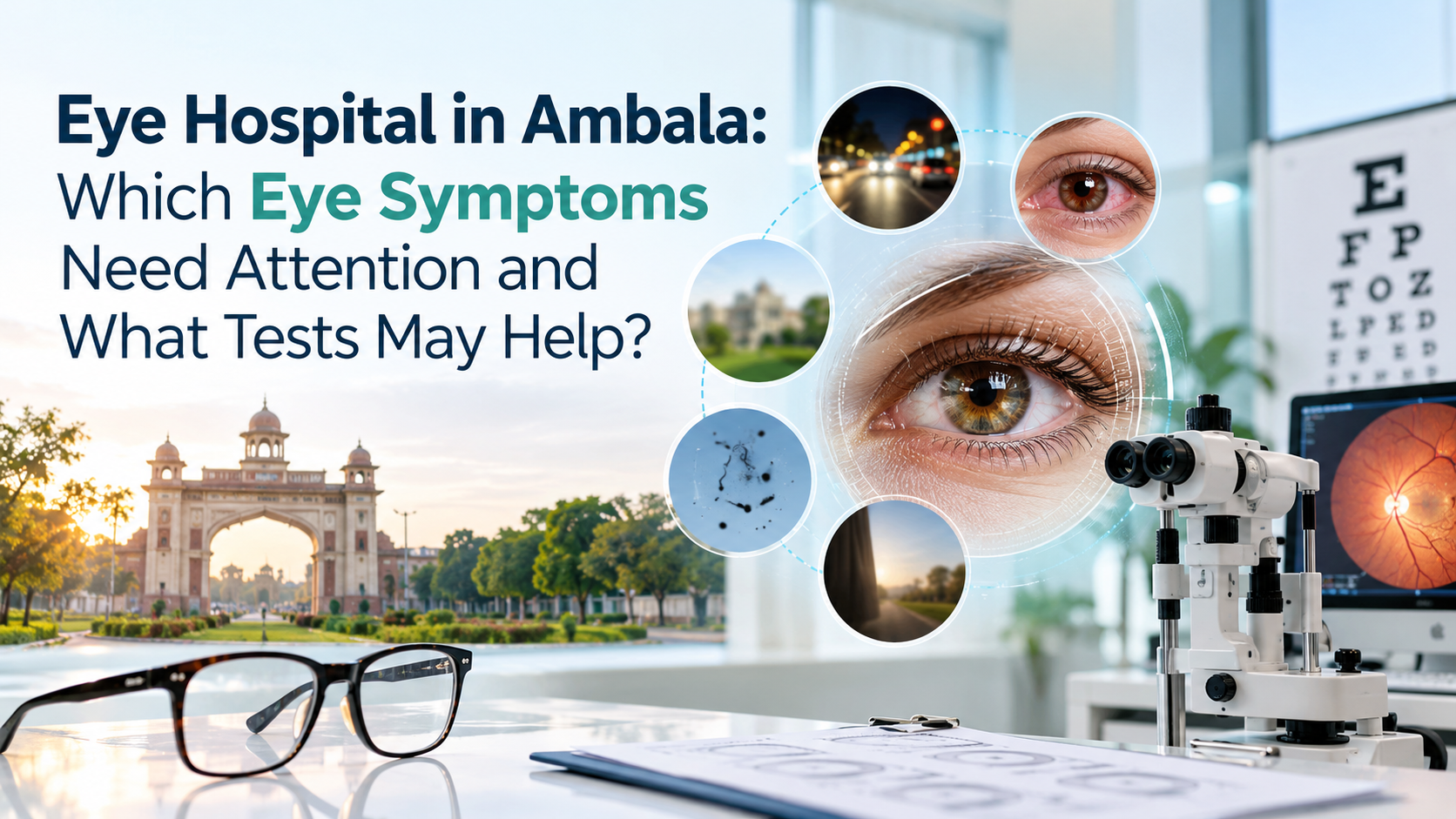
An eye problem rarely arrives with a clear diagnosis. One person notices headlight glare while driving; another sees a small shadow in one eye; someone with diabetes reads the newspaper comfortably and assumes their retina must be healthy. Although these experiences sound different, they all raise the same practical question: should you arrange a routine eye examination, seek an early appointment, or get emergency care?
For people searching for an eye hospital in Ambala, the useful starting point is the symptom and its urgency, not the name of a particular operation. A comprehensive eye evaluation can distinguish a spectacle-power change from conditions affecting the cornea, lens, retina or optic nerve. Some conditions develop slowly; others can threaten sight within hours.
This guide explains how common vision changes are assessed, why symptoms do not always reveal disease severity, what your ophthalmologist may examine, and when treatment or follow-up may be discussed. It is educational, not a substitute for an individual examination.
Start with the timeline: sudden, gradual or recurring?
When an eye doctor asks when a symptom began, the answer helps determine which conditions require urgent exclusion. A sudden change over minutes or hours has a different clinical significance from blurred vision that has progressed gradually over several months. Symptoms affecting one eye may also need a different evaluation from those affecting both.
A useful description includes onset, whether the change is constant or intermittent, associated pain, redness, headache, flashes, new floaters, injury, recent eye surgery and any existing diabetes or glaucoma. Try covering one eye at a time without pressing on the eyeball. This can help you report whether the problem is present in one eye or both, but it does not replace examination.
Seek emergency assessment immediately for sudden loss of vision, a new curtain or shadow across vision, flashes accompanied by a sudden shower of floaters, severe pain with a red eye and nausea, significant chemical exposure, or an eye injury. Do not wait for a routine appointment or drive yourself if your sight is impaired. Chemical exposures require immediate irrigation with clean running water while arranging emergency care.
Blurred vision is a symptom, not a diagnosis
Blurred vision may result from refractive errors, dry eye, cataract, corneal disorders, retinal disease or other causes. The key distinctions are whether the blur clears with blinking, changes with distance, comes with discomfort or affects daily tasks. A recent change in glasses prescription does not rule out disease.
If the blur is gradual and painless, your ophthalmologist may begin with visual-acuity and refraction testing, then examine the ocular surface, lens and back of the eye. If the change is sudden or accompanied by neurological symptoms, it needs urgent assessment instead. Never assume that sudden vision loss is simply a spectacle issue.
Intermittent blur after prolonged screen use may reflect tear-film instability, particularly when there is burning or a gritty sensation. However, a person with diabetes who notices fluctuating sight may also need assessment for blood-glucose-related changes or retinal problems. The pattern offers clues, not certainty.
Glare, halos and difficulty driving at night
Glare around headlights can occur with cataract, refractive error, dry eye and other optical problems. In cataract, the natural lens gradually becomes cloudy and scatters incoming light. People may report that evening driving is harder even when they can still read some letters on an eye chart.
An eye examination helps establish whether cataract is responsible and whether another disease is present at the same time. Surgery is not automatically required simply because a cataract exists. The decision usually considers function, examination findings, patient priorities and likely benefits and risks.
Leelawati Hospital lists cataract surgery among its ophthalmology services. Patients who want to learn about examination and surgical planning can refer to the hospital’s cataract surgery page: https://leelawatihospital.net/departments/eye-surgery/cataract-surgery/. The operating technique and lens choice should be discussed individually rather than selected from promotional material.
Why a person with clear vision may still need a retinal examination
Diabetic retinopathy is an important example of an eye condition that may be present before a patient notices reduced sight. Diabetes can affect small retinal blood vessels and may also contribute to swelling near the macula, the part of the retina used for detailed central vision.
For adults with type 2 diabetes, guidelines recommend a dilated eye assessment at diagnosis. In type 1 diabetes, an initial examination is generally recommended within five years of diagnosis. Later screening intervals depend on findings, glucose control and the clinician’s assessment. People with established retinopathy need monitoring at least annually and sometimes more often.
A normal home vision check or the ability to read clearly cannot reliably exclude early retinal damage. A dilated examination may be needed even when symptoms are absent. In selected cases, retinal photography, optical coherence tomography (OCT) or other investigations help a specialist assess the retina. The doctor decides which tests are warranted and whether referral or treatment is needed.
High blood pressure, kidney problems and pregnancy in someone with pre-existing diabetes may change follow-up needs. Managing glucose, blood pressure and lipids in coordination with the treating physician is important, but it does not replace eye screening. Leelawati Hospital includes diabetic retinopathy care on its official list of eye services.
Glaucoma: why eye pressure is only part of the picture
Glaucoma refers to a group of diseases associated with damage to the optic nerve. In common forms, the loss of peripheral vision can be so gradual that a person may not notice it until substantial damage has occurred. A family history, increasing age and certain other risk factors may justify closer assessment.
It is a mistake to think that a normal single eye-pressure reading excludes glaucoma. Some people develop glaucomatous damage despite pressures in the statistically usual range, while others have raised pressure without optic-nerve damage. An ophthalmologist interprets pressure readings alongside optic-nerve appearance, corneal measurements, visual-field assessment and other findings as appropriate.
Glaucoma management may involve eye drops, laser treatment or surgery depending on the type and stage of disease. Treatment seeks to reduce the risk of further damage; vision already lost from glaucoma is generally not restored. For the hospital’s listed glaucoma service, see https://leelawatihospital.net/departments/eye-surgery/glaucoma/.
A sudden, very painful red eye with blurred vision, halos, headache or nausea can indicate acute angle closure or another urgent condition. That scenario calls for emergency assessment, not an ordinary screening visit.
Flashes, floaters and a shadow over vision
A small number of longstanding floaters can be common, particularly as the vitreous gel inside the eye changes with age. Nevertheless, a sudden increase in floaters, flashing lights or a dark curtain across the visual field can suggest a retinal tear or detachment. These warning signs warrant prompt same-day emergency eye assessment.
An eye specialist may dilate the pupils to inspect the peripheral retina. Additional imaging is sometimes useful, but the clinical examination remains central. Treatment depends on the actual diagnosis; a retinal tear and an established retinal detachment do not have identical management.
Do not wait for pain to develop. Retinal detachment may be painless. Similarly, symptoms that improve temporarily should still be reported if they started abruptly.
Redness, watery eyes and discomfort
Red eyes may result from allergy, dryness, infection, irritation, inflammation or more serious conditions. The combination of redness and significant pain, light sensitivity or worsening vision deserves a more urgent examination than mild irritation without visual change.
Dry-eye disease can produce burning, stinging, fluctuating blur or reflex tearing. It is not always caused solely by screen time. Tear-film quality, eyelid function, medications and environmental conditions may contribute. An examination can help avoid unnecessary antibiotic or steroid eye-drop use.
Contact-lens wearers with a painful red eye need prompt care because corneal infections can progress rapidly. Do not continue wearing lenses while awaiting assessment. Avoid using someone else’s prescription drops, particularly steroid-containing products, without an ophthalmologist’s direction.
Vision correction queries: when is LASIK assessment relevant?
People searching for a LASIK hospital in Ambala may simply want to reduce dependence on spectacles. That is different from seeking treatment for cataract, glaucoma or retinal disease. LASIK reshapes the cornea to correct selected refractive errors; it does not treat all reasons for poor vision.
An eligibility consultation typically assesses stable prescription, corneal shape and thickness, ocular-surface health, age, medical history and realistic expectations. Some patients may be advised against LASIK or offered a different refractive option after an individual examination.
The hospital lists laser eye surgery and refractive procedures. Its service information is available at https://leelawatihospital.net/departments/eye-surgery/laser-eye-surgery/. Suitability and specific procedure availability should be confirmed at consultation; no laser procedure guarantees lifelong freedom from glasses.
Persistent dryness or unstable vision should be assessed before refractive surgery. Any plan to correct spectacles should also account for normal age-related near-vision changes.
What happens during a comprehensive eye assessment?
The visit generally begins with your symptoms, visual history, medical conditions, current medicines and previous eye procedures. The clinician may check distance and near vision, perform refraction, examine the front of the eye using a slit lamp and measure eye pressure.
Depending on symptoms and risk factors, examination of the retina and optic nerve through dilated pupils may be needed. Dilating drops can temporarily blur near vision and increase light sensitivity; arrange transport if your clinician advises that driving afterwards is unsafe.
Not every patient needs every machine-based test. Corneal scans may be relevant when considering LASIK; lens measurements are important when cataract surgery is planned; a visual field or optic-nerve imaging may be used for glaucoma assessment; and retinal imaging may be useful in diabetes. The findings should answer a clinical question rather than form a routine test package for everyone.
Ask for a clear explanation of the diagnosis, which findings are certain, what further testing is needed, and how quickly follow-up should occur. If there is uncertainty, it is reasonable to ask whether a subspecialty assessment is indicated.
Planning follow-up for different ages and health risks
An adult without symptoms or known risk factors may require eye examinations less frequently than a person with diabetes, a family history of glaucoma or previous eye disease. Age is also relevant. General examination intervals can guide discussion, but an ophthalmologist should individualise them.
Children may not describe poor vision accurately. Squinting, sitting very close to screens, an eye turn or difficulty seeing the classroom board can justify an evaluation. Older adults may experience cataract or have other age-associated conditions, so changing day-to-day function is an important reason to seek care.
After eye surgery, keep the follow-up schedule provided by your surgeon, even when you feel well. New severe pain, significant redness or a sudden drop in vision after surgery needs urgent advice.
Eye care in Ambala: making the consultation practical
When arranging an appointment with an eye hospital in Ambala City or elsewhere in Haryana, describe the main symptom and its onset when you call. This helps the reception team understand whether you are requesting routine assessment or reporting an urgent concern; however, administrative triage cannot replace emergency assessment.
Carry your current glasses, past prescriptions, eye reports, medicine list and any relevant diabetes or blood-pressure records. Tell the eye doctor about prior surgery, contact-lens use, allergies and family history. If the appointment might require pupil dilation, allow extra time and ask whether you should arrange a companion.
Leelawati Eye Super Specialty Hospital lists cataract surgery, laser eye surgery, diabetic retinopathy care, glaucoma treatment and other eye-care services on its official website. The hospital’s published background describes its association with Dr. Mathur Eye and Children Hospital, established in 2002. More information is available at https://leelawatihospital.net/about-us/ and the official ophthalmology profile at https://leelawatihospital.net/the-founder/.
Before travelling, confirm the relevant clinician’s appointment availability and whether the necessary examination can be arranged. This is especially important for patients who may need more than one visit. The hospital’s contact information is available at https://leelawatihospital.net/contact/.
Frequently Asked Questions
1. Can my eyesight be normal even if I have an eye disease?
Yes. Early diabetic retinopathy and some forms of glaucoma can develop without noticeable vision changes. Examination is based on risk factors as well as symptoms.
2. Is sudden blurred vision an emergency?
A sudden, unexplained change in vision requires urgent medical assessment, particularly if it affects one eye or is associated with pain, weakness, speech changes or a shadow across vision.
3. What is the difference between a vision test and a complete eye examination?
A vision test measures how clearly you see. A complete examination may also assess eye structures, eye pressure, the optic nerve and retina, according to clinical need.
4. Should someone with type 2 diabetes have an eye test immediately after diagnosis?
An initial dilated comprehensive eye examination is recommended at diagnosis, even without symptoms. The eye professional then advises the appropriate review interval.
5. Can glaucoma occur when eye pressure is normal?
Yes. Glaucoma is diagnosed through the overall clinical picture, not one pressure reading alone. The optic nerve, visual field and other factors can matter.
6. Is night-time glare always caused by cataract?
No. Cataract is one cause, but refractive errors, ocular-surface problems and other conditions may also produce glare. An eye assessment helps distinguish them.
7. Do new flashes or floaters require same-day examination?
New flashes with a sudden burst of floaters or a curtain-like shadow can signal retinal pathology and should be evaluated urgently, usually the same day.
8. Can LASIK treat eyesight reduced by cataract or retinal disease?
LASIK addresses suitable refractive errors by reshaping the cornea. It does not remove cataracts or treat diabetic retinal damage, and candidacy requires evaluation.
9. Should I stop prescription eye drops before an appointment?
Do not stop prescribed medicine without medical advice. Bring the drops or a list of their names, and tell the ophthalmologist how you use them.
10. How can I contact Leelawati Eye Super Specialty Hospital in Ambala?
The hospital lists 0171-2550456 and 0171-2550446 for contact. Confirm consultation arrangements directly before travelling to its Ambala City location.
Appointments and Contact
Leelawati Eye Super Specialty Hospital
Address: 8, 9 Police Line Road, Near Arya Chowk, Ambala City, Haryana, India
Telephone: 0171-2550456 | 0171-2550446
Website: https://leelawatihospital.net/
Appointment enquiries: https://leelawatihospital.net/contact/
Conclusion
An eye hospital visit is most useful when it answers a specific question: what is causing the change in vision, how urgent is it, and what should happen next? In Ambala, patients considering cataract care, glaucoma monitoring, diabetic retinal examination or LASIK should start with an appropriate clinical assessment rather than assuming every symptom needs the same test or treatment. For sudden sight-threatening symptoms, seek emergency care without delay. For gradual changes or routine risk-based screening, arrange a consultation and keep the follow-up plan recommended for your eyes.
Medical information notice: This article offers general patient education and cannot diagnose an individual eye condition. Treatment decisions and screening intervals must be personalised by a qualified ophthalmologist.
Clinical References for Medical Review (not part of blog)
American Diabetes Association, Standards of Care in Diabetes 2026: https://doi.org/10.2337/dc26-s012
All India Ophthalmological Society diabetic retinopathy consensus: https://pmc.ncbi.nlm.nih.gov/articles/PMC7942107/
American Academy of Ophthalmology comprehensive eye evaluation guideline summary: https://www.guidelinecentral.com/guideline/309956/
