
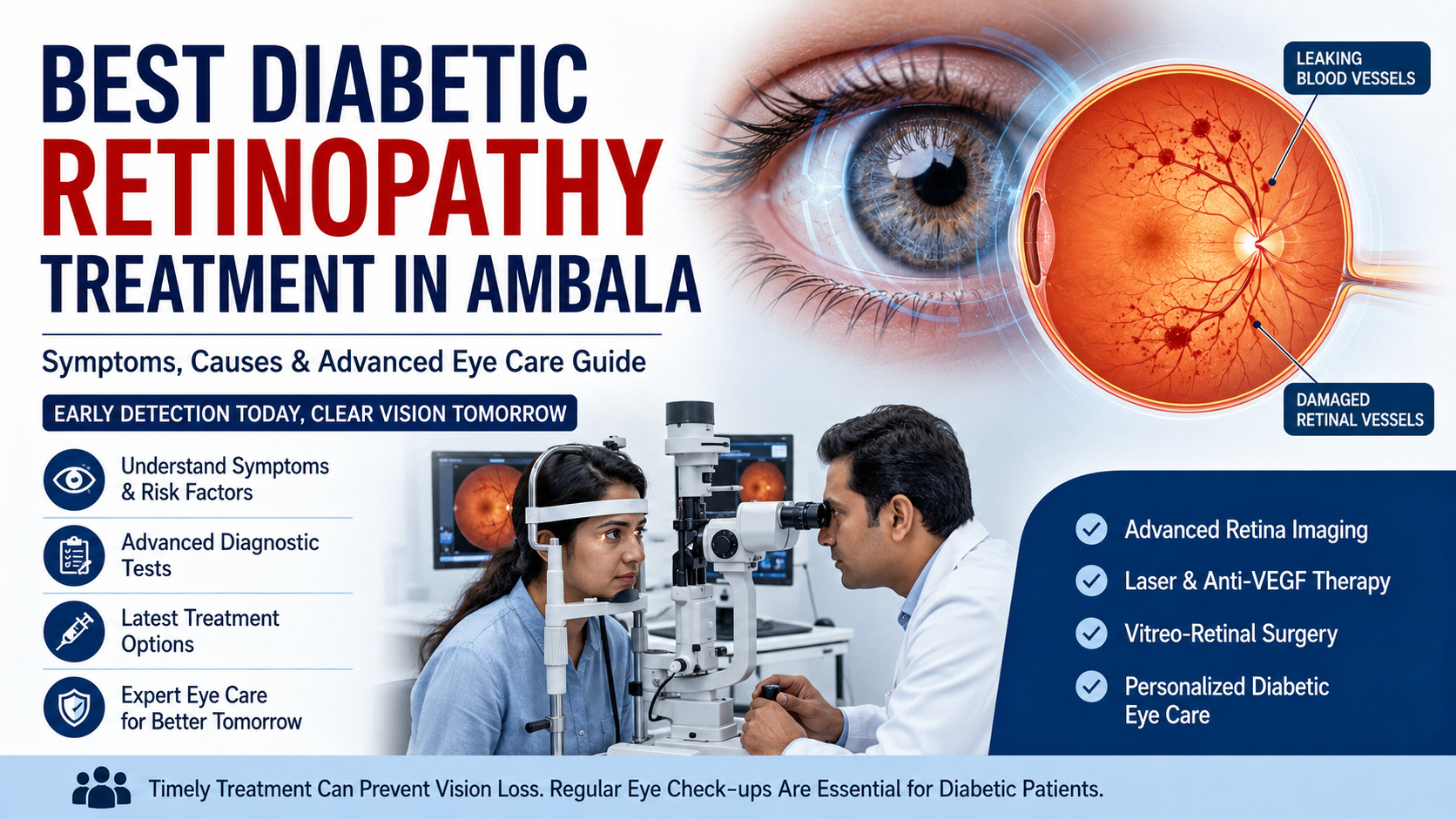
Diabetes is one of the fastest-growing chronic diseases in India, and its complications are increasing at an alarming rate. Among all complications, diabetic retinopathy is one of the most serious because it directly affects vision and can lead to permanent blindness if not diagnosed and treated on time.
In cities like Ambala, many patients search for a Diabetic Retinopathy Hospital in Ambala. One of the trusted eye care centres in the region is Leelawati Hospital, Ambala, which provides advanced diagnosis and treatment for diabetic retinopathy.
According to ophthalmology studies, more than 30% of diabetic patients develop some form of retinal damage during their lifetime. The most important fact is that early detection can prevent up to 90% of diabetes-related blindness.
This is why modern eye care focuses not only on treatment but also on regular screening, early diagnosis, and preventive retina care.
Medical Disclaimer
This article is for educational purposes only and should not replace medical consultation. Diagnosis and treatment of diabetic retinopathy must be done by a qualified ophthalmologist based on individual eye examination, retinal imaging, and overall health condition.
What is Diabetic Retinopathy?
Diabetic retinopathy is a progressive retinal disorder caused by long-term uncontrolled diabetes mellitus. It affects the tiny blood vessels (capillaries) of the retina.
The retina is the light-sensitive layer at the back of the eye responsible for converting light into visual signals. When blood sugar levels remain high for a long period, these vessels become weak, damaged, and start leaking fluid or blood.
Hospitals like Leelawati Hospital, Ambala focus on early retinal screening to detect diabetic damage before vision loss occurs.
How the damage happens:
- High blood sugar weakens retinal capillaries
- Blood vessels start leaking fluid
- Retina swells (macular edema)
- Blood flow decreases (ischemia)
- Abnormal new vessels grow (neovascularization)
- Bleeding occurs inside the eye
- Vision becomes permanently damaged if untreated
Why Diabetic Retinopathy is Called a Silent Disease
Diabetic retinopathy is extremely dangerous because:
- It develops without pain
- Vision remains normal in early stages
- Damage occurs slowly over years
- Symptoms appear only in advanced stages
- Sudden vision loss can occur without warning
This is why regular screening at a Diabetic Retinopathy Hospital in Ambala is critical for all diabetic patients.
Risk Factors (Detailed Clinical Breakdown)
1. Duration of Diabetes
Longer diabetes duration = higher risk of retinal damage.
2. Poor Sugar Control
High HbA1c levels directly damage microvascular structures.
3. Blood Pressure
Hypertension increases retinal vessel stress.
4. Cholesterol Levels
High cholesterol causes blockages in retinal circulation.
5. Lifestyle Factors
- Smoking reduces oxygen supply
- Alcohol affects vascular health
- Sedentary lifestyle increases risk
6. Pregnancy with Diabetes
Hormonal changes can worsen retinal condition.
Symptoms of Diabetic Retinopathy (Stage-wise Explanation)
Early Stage (No Symptoms)
- Vision appears completely normal
- No pain or discomfort
Mild to Moderate Stage
- Slight blurriness
- Difficulty focusing
- Occasional floaters
Advanced Stage
- Dark spots in vision
- Sudden blurring
- Difficulty reading or recognizing faces
Severe Stage
- Sudden vision loss
- Eye bleeding
- Retinal detachment risk
Stages of Diabetic Retinopathy (Clinical Classification)
1. Mild Non-Proliferative DR
- Microaneurysms form
- No vision loss
2. Moderate Non-Proliferative DR
- Vessel swelling and blockage begins
3. Severe Non-Proliferative DR
- Reduced blood supply to retina
- High risk of progression
4. Proliferative Diabetic Retinopathy
- New abnormal vessels grow
- Risk of bleeding and blindness
- Most dangerous stage
Advanced Diagnostic Tests in Ambala Eye Hospitals
These diagnostic tests are commonly performed at Leelawati Hospital, Ambala for early detection and accurate staging of diabetic retinopathy.
A modern Diabetic Retinopathy Hospital in Ambala uses advanced retinal imaging:
1. Fundus Photography
Captures high-resolution retina images for diagnosis and monitoring.
2. Optical Coherence Tomography (OCT)
- Detects macular edema
- Measures retinal thickness
- Shows fluid accumulation
3. Fluorescein Angiography
- Highlights leaking blood vessels
- Detects blocked circulation areas
4. Wide-field Retinal Imaging
- Covers large retinal area
- Useful in advanced cases
Treatment Options for Diabetic Retinopathy (Expanded Medical Detail)
1. Laser Photocoagulation Therapy
- Seals leaking blood vessels
- Reduces oxygen demand in retina
- Prevents disease progression
2. Anti-VEGF Injections
These injections block abnormal vessel growth.
Common drugs:
- Ranibizumab
- Aflibercept
- Bevacizumab
Benefits:
- Reduces swelling
- Improves vision
- Prevents bleeding
3. Vitreo-Retinal Surgery
Used in advanced cases:
- Removes vitreous hemorrhage
- Repairs retinal detachment
- Restores partial vision
4. Systemic Diabetes Management
- Strict sugar control
- Blood pressure management
- Lipid control
Without systemic control, eye treatment alone is not effective.
Why Early Detection Saves Vision
Early diagnosis can:
- Prevent irreversible blindness
- Reduce need for surgery
- Improve treatment response
- Maintain central vision
- Slow disease progression
Most cases of blindness occur due to late diagnosis, not lack of treatment options.
Expert Clinical Insight
From a retinal specialist’s perspective, diabetic retinopathy is a chronic microvascular complication requiring stage-based management.
Modern ophthalmology uses:
- OCT imaging
- Fundus fluorescein angiography
- Wide-field retinal scans
to detect even microscopic retinal changes.
Treatment decisions depend on:
- Severity of retinal ischemia
- Presence of macular edema
- Extent of neovascularization
- Patient’s systemic diabetic control
A qualified ophthalmologist focuses on:
- Preventing vision loss
- Maintaining retinal function
- Long-term disease stability
Modern retina care is not just treatment-based but preventive and monitoring-driven.
How to Choose the Best Diabetic Retinopathy Hospital in Ambala
1. Retina Specialist Availability
- Vitreo-retinal surgeon experience
- Diabetes eye disease expertise
2. Advanced Diagnostic Infrastructure
- OCT scanner
- Fundus camera
- Fluorescein angiography system
3. Treatment Facilities
- Laser therapy unit
- Injection facility (Anti-VEGF)
- Retina surgery operation theatre
4. Emergency Care
- Sudden vision loss management
- Retinal bleeding treatment
5. Follow-up System
- Regular monitoring
- Diabetes eye screening programs
Prevention of Diabetic Retinopathy
- Maintain HbA1c under control
- Monitor blood pressure regularly
- Healthy diet and exercise
- Avoid smoking and alcohol
- Annual eye check-ups
- Immediate consultation for vision changes
Diabetic Retinopathy Hospital in Ambala – Advanced Retina Care at Leelawati Hospital
If you are searching for the Best Diabetic Retinopathy Hospital in Ambala, Leelawati Eye Super Speciality Hospital, Ambala City provides advanced retina diagnosis and treatment using modern ophthalmic technology and experienced eye specialists.
The hospital focuses on early detection and management of diabetic retinopathy using advanced retinal imaging such as OCT, fundus photography, and laser treatment systems. With a patient-centric approach, Leelawati Hospital ensures timely intervention to prevent vision loss in diabetic patients.
From early-stage diabetic eye screening to advanced vitreoretinal care, the hospital provides complete retina care services under one roof.
Leelawati Hospital – GMB & Location Details (Ambala)
Main Branch – Ambala City
Leelawati Eye Super Speciality Hospital
Address: 8, 9, Police Line Rd, near Arya Chowk, Inder Nagar, Ambala, Haryana 134003 Phone: +91 171 255 0456
Website: https://leelawatihospital.net
Google Maps (GMB): https://share.google/9P4S0tKtF9L2xw295
Why Choose Leelawati Hospital for Diabetic Retinopathy in Ambala?
Patients trust Leelawati Eye Hospital Ambala for diabetic retina care because of:
- Experienced ophthalmologists and retina specialists
- Advanced diagnostic tools (OCT, Fundus Imaging)
- Laser treatment for diabetic retinopathy
- Anti-VEGF injection facility for retinal swelling
- Comprehensive eye care under one roof
- Early detection & preventive retina screening programs
Advanced Diabetic Retinopathy Treatment Available
Leelawati Hospital offers modern retina care including:
- OCT (Optical Coherence Tomography) scanning
- Fundus photography for retina monitoring
- Laser photocoagulation therapy
- Anti-VEGF injections for macular edema
- Vitreoretinal evaluation & surgical referral cases
These treatments help in preventing vision loss and stabilizing retinal damage in diabetic patients.
Follow Leelawati Hospital
Stay updated with eye care awareness and services:
- Facebook: https://www.facebook.com/lwhamb
- Instagram:https://www.instagram.com/leelawati.hospital/
- YouTube: https://www.youtube.com/channel/UCzIJnUXZRRQjx_W5Kfu6a6g
Frequently Asked Questions (FAQs)
1. What is diabetic retinopathy?
A diabetes-related eye disease affecting retina blood vessels.
2. Can it cause blindness?
Yes, if untreated in advanced stages.
3. Is it reversible?
Early stages can be controlled but not fully reversed.
4. What is best treatment?
Laser, injections, or surgery depending on severity.
5. Is OCT scan necessary?
Yes, it helps detect early damage.
6. How often should diabetics check eyes?
Once every year minimum.
7. Is it painful?
No, it is painless in early stages.
8. Who treats it?
A retina specialist.
9. Can sugar control help?
Yes, it slows progression.
10. Is surgery always needed?
No, only in advanced cases.
Conclusion
Diabetic retinopathy is one of the most serious complications of diabetes, but it is also highly preventable with early detection and timely treatment. Choosing the right Diabetic Retinopathy Hospital in Ambala ensures access to advanced diagnostic tools, experienced retina specialists, and modern treatment options such as laser therapy, intravitreal injections, and vitreoretinal surgery. However, the most important factor is regular eye screening before symptoms appear. If you are diabetic, do not wait for vision problems. Schedule a retinal eye examination today and protect your eyesight for the future.
